Specify the ankle silhouette before requesting a price
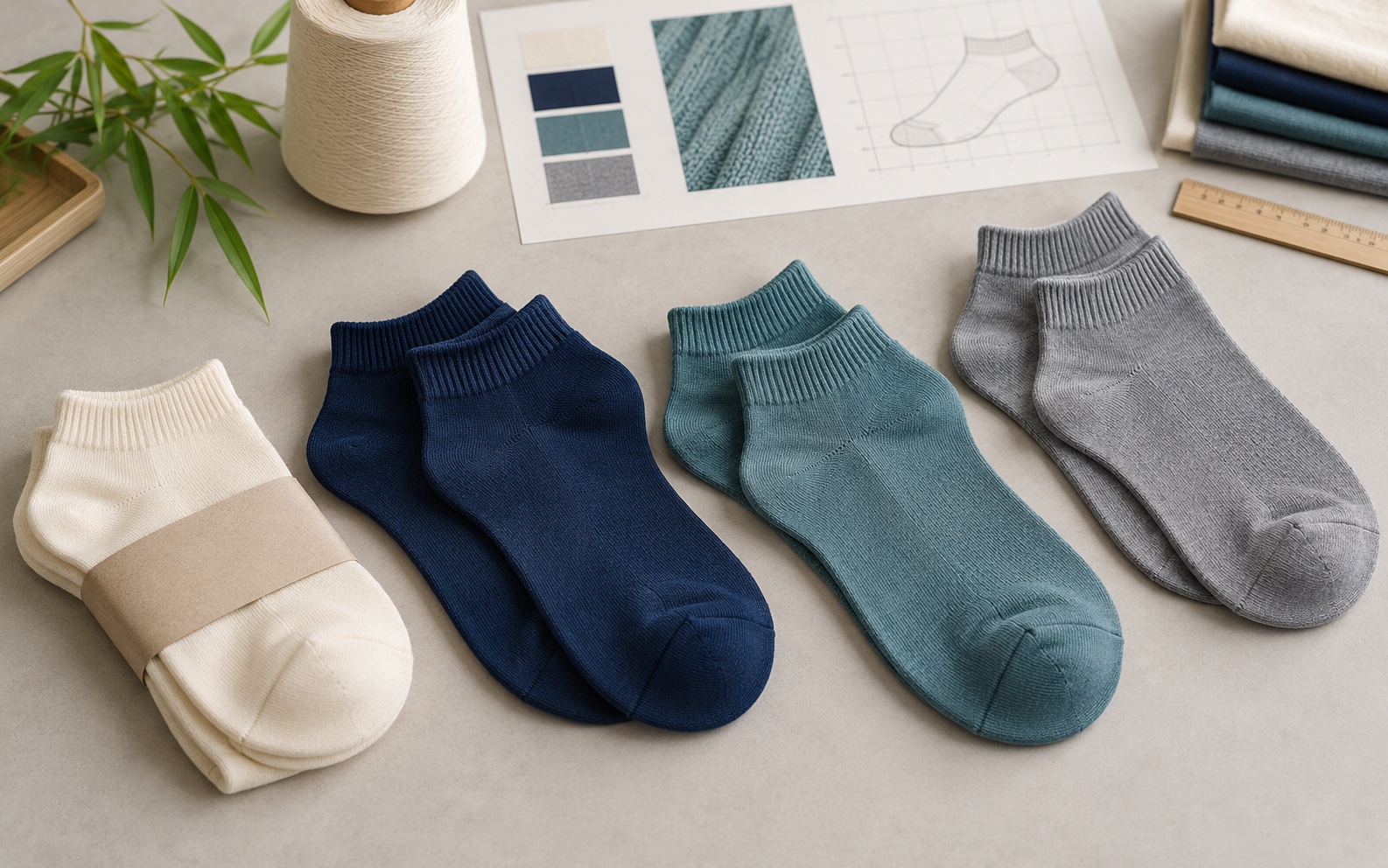
Ankle socks sit above a no-show liner but below a standard crew, and small differences in cuff height can change both appearance and performance. Buyers should provide a measurement from the heel reference point or an approved physical sample instead of relying only on words such as low cut, quarter or ankle. The intended footwear, season and customer profile also influence the most useful height.
A lightweight everyday ankle sock, a cushioned casual style and a sport-inspired product may all use a bamboo-derived viscose blend, yet they need different gauges, sole constructions and reinforcement. Define the use case, target thickness, shoe environment, size system and retail price tier before comparing manufacturer quotations.
Balance softness, recovery and high-wear zones
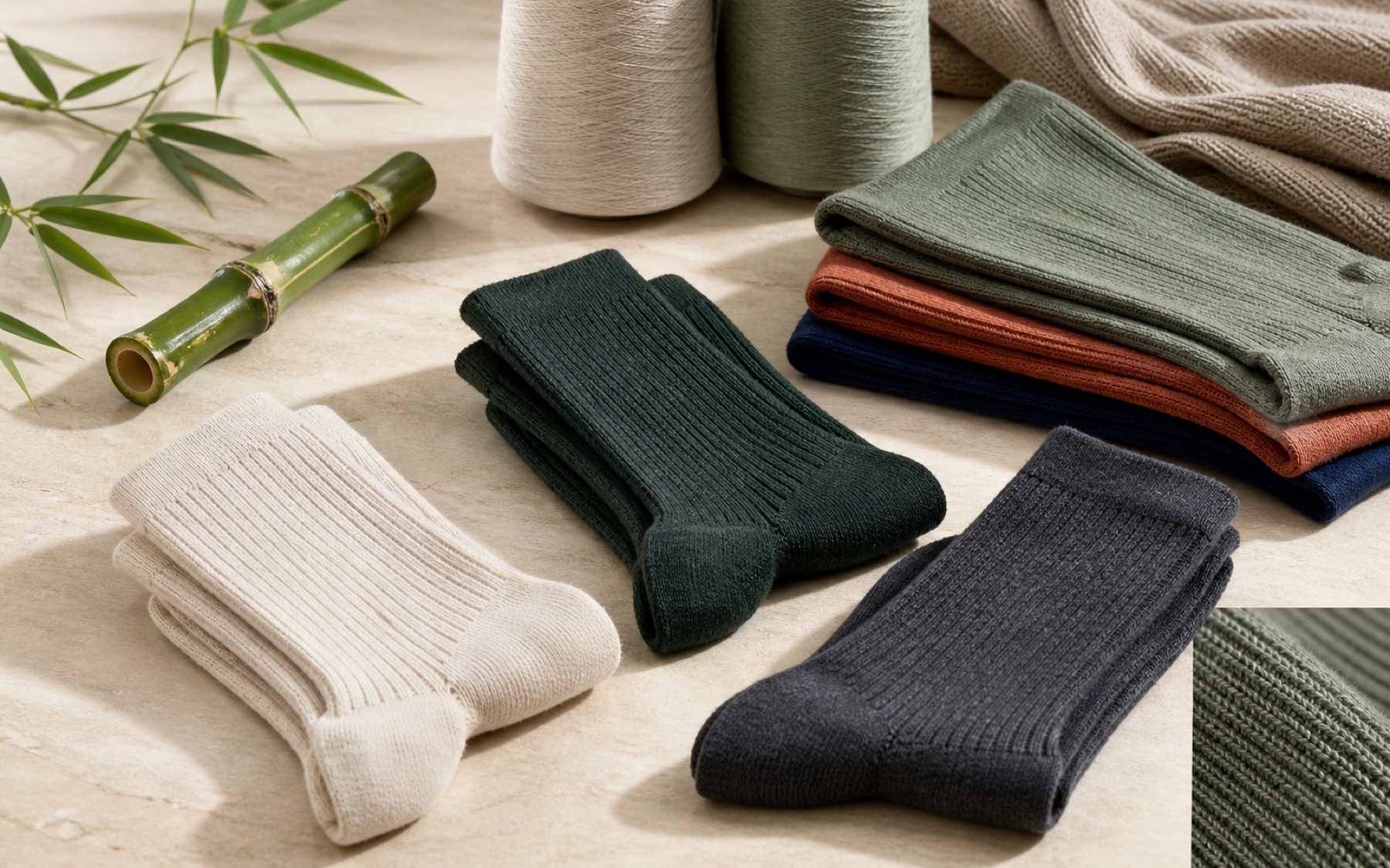
Bamboo-derived viscose is often selected for a smooth hand feel, but an ankle sock still needs supporting fibers for recovery, knitting stability and abrasion resistance. The best blend is the one engineered for the finished use case, not automatically the option with the highest headline bamboo percentage. Ask the supplier how the main body, cuff, heel and toe are constructed and where reinforcement is placed.
Because the cuff is short, fit errors are more noticeable. A loose opening can slide into the shoe, while an overly firm cuff may feel restrictive. The heel pocket should hold the sock in position, and the toe area should suit the target footwear. Cushioned soles, mesh panels or arch bands may be added when the brief justifies them, but each feature should be reviewed for bulk, stretch and cost.
- Confirm finished cuff height and opening
- Specify lightweight, medium or cushioned construction
- Review heel depth and stay-in-place performance
- Define heel and toe reinforcement
- Check toe seam comfort in the intended footwear
Test sizing, washing and retail presentation
Sample evaluation should include the lower and upper boundary of every grouped shoe-size range. Record heel position, toe room, cuff behavior and movement during a realistic wear test. Repeat washing can reveal dimensional change, surface wear and loss of recovery that may not appear during a short fitting session.
Review the sample in its proposed packaging as well. A belly band or multipack sleeve should keep pairs secure without compressing the cuff, and the size and color need to remain easy to identify. Composition and care copy must match the final production specification and the labeling rules of the destination market.
Plan a focused wholesale assortment and reorder system
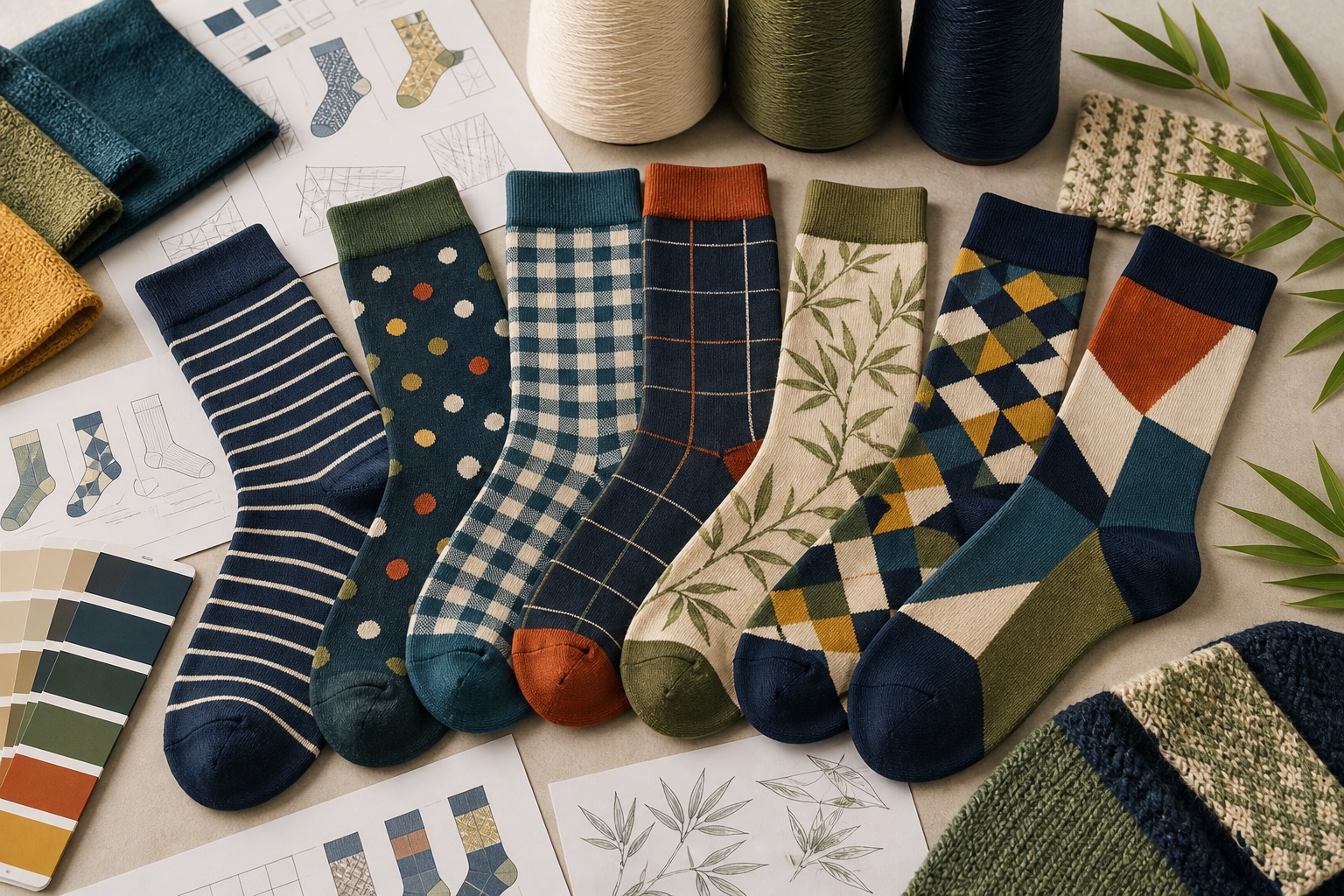
A first wholesale range can combine replenishment neutrals with a smaller group of seasonal or brand colors. Using one approved base construction across several colors simplifies evaluation and helps buyers identify whether sales differences come from color rather than fit. Pattern, embroidery, jacquard logos and private-label packaging can be introduced where they add visible value.
For quotation and sampling, provide quantity by color and size, target composition, measurements, artwork, packaging, destination and launch date. Confirm the MOQ allocation, sample scope, production lead time and inspection standard in writing. Archive yarn references, measurement charts, packaging files and an approved sample under one style code so successful ankle socks can be reordered consistently.
Commercial planning for wholesale ankle socks
Normalize every quotation around the same composition, sock weight, measurements, size allocation, packaging and delivery terms. A price difference may reflect a lighter construction, different reinforcement or fewer packaging steps rather than manufacturing efficiency.
Build the first order with enough depth in dependable neutrals and smaller quantities in test colors. When production is approved, retain the final specification, yarn information, packaging artwork and sealed sample together. That record reduces ambiguity when the range is replenished or extended into new patterns.
- Compare quotations on one controlled specification
- Separate core replenishment colors from test colors
- Approve size and color quantities before production
- Define inspection and packing criteria in writing
- Use one style code and approved sample for reorders
Wholesale bamboo ankle sock specification checklist
A reliable ankle sock specification defines height, heel shape, cuff opening, size range, weight, reinforcement and packaging. These details determine whether the product stays in place and fits the intended footwear.
Compare suppliers on the same approved construction. Fiber percentages alone do not show the quality of recovery, toe comfort, wash stability or high-wear zones, so physical samples and controlled measurements remain essential.
- State the exact ankle height and intended footwear
- Define blend, gauge, weight and reinforcement zones
- Fit-test both boundaries of each grouped size
- Check cuff recovery and heel position after washing
- Confirm MOQ allocation, packaging and reorder references
Frequently asked questions
What is the difference between ankle and no-show bamboo socks?
Ankle socks have a visible cuff above the shoe opening, while no-show liners are cut lower and depend more heavily on heel grip and shoe-specific fit. Buyers should provide measurements because naming conventions vary by market.
What blend is best for wholesale bamboo ankle socks?
There is no universal best percentage. Bamboo-derived viscose can provide the main hand feel, while reinforcement and stretch yarns support recovery and wear. The blend should be developed around the weight, footwear and price target.
Can bamboo ankle socks be customized for private label?
Yes. Options may include custom yarn colors, jacquard patterns or logos, embroidery, printed or woven labels, belly bands, gift boxes and multipack sleeves, subject to the construction and order quantity.
Primary references used in this guide.
These official references support the material, labeling, testing or regulatory context. Product requirements still need confirmation for the exact construction and destination market.
Continue planning a wholesale bamboo sock program.
Compare materials, sizing, sampling and private-label options before approving the ankle sock specification.
Plan your custom bamboo sock project.
A controlled ankle sock specification protects fit, comfort and reorder consistency. Share your target height, sizes, colors, quantity and packaging to begin sampling a wholesale bamboo ankle sock range.
Specifications, claims, testing, labeling and compliance should be confirmed for the exact product and destination market. This guide is general sourcing information, not legal or medical advice.