Start from the target consumer
A factory cannot select the ideal size system without knowing the destination market, wearer and product type. Shoe-size ranges differ across regions, and one broad “one size” claim may not provide the same fit for every consumer group.
Define men’s, women’s, unisex or children’s positioning and state whether the sock is intended for slim dress shoes, casual footwear, boots or another environment.
Measurements beyond shoe size
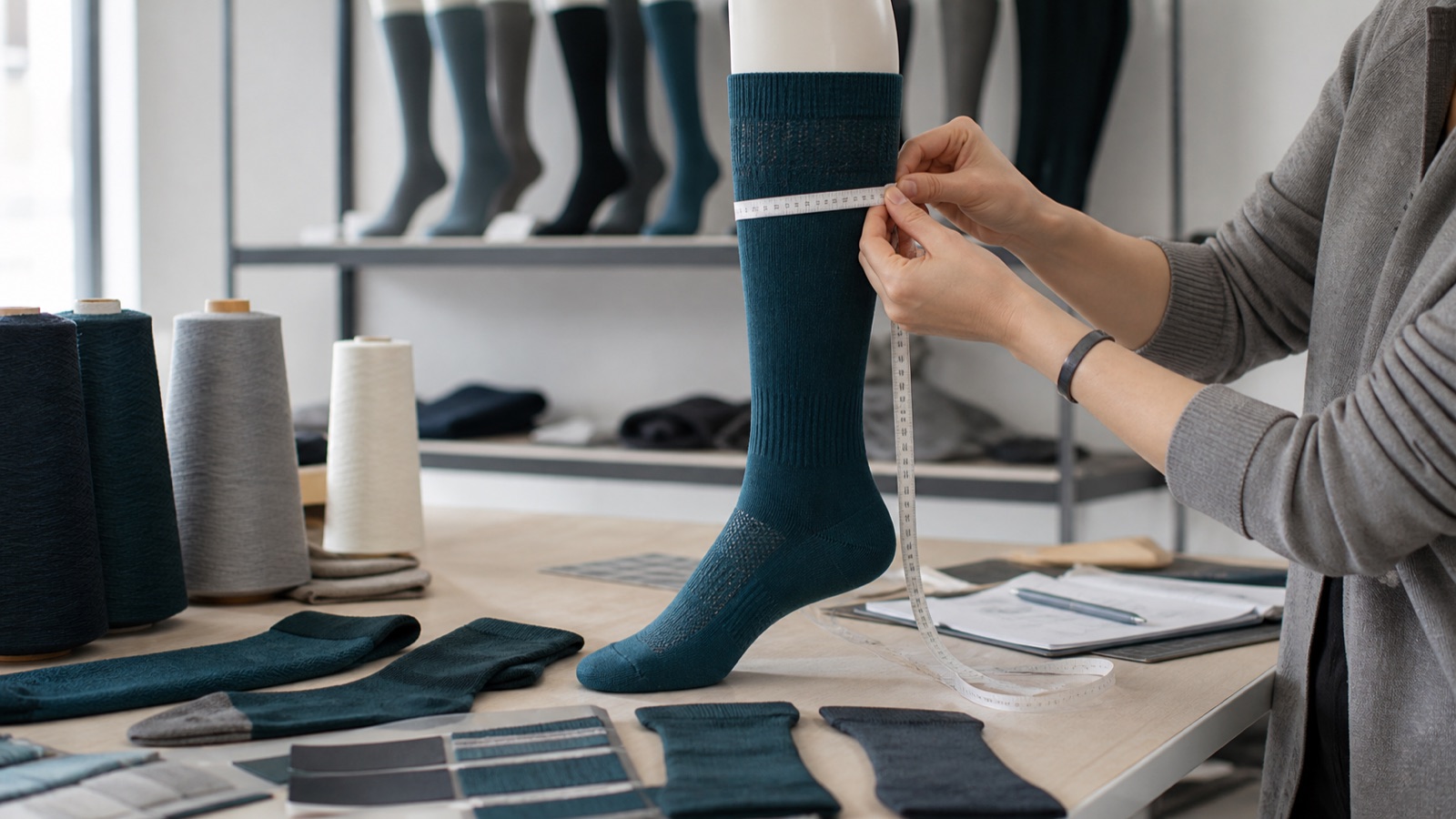
Useful specifications can include foot length, leg length, welt width, relaxed circumference and stretch targets. Compression styles require additional circumference and pressure considerations.
- Target shoe-size conversion
- Foot and leg measurements
- Cuff and body stretch
- Heel pocket placement
- Size marking method
Evaluate fit across the range
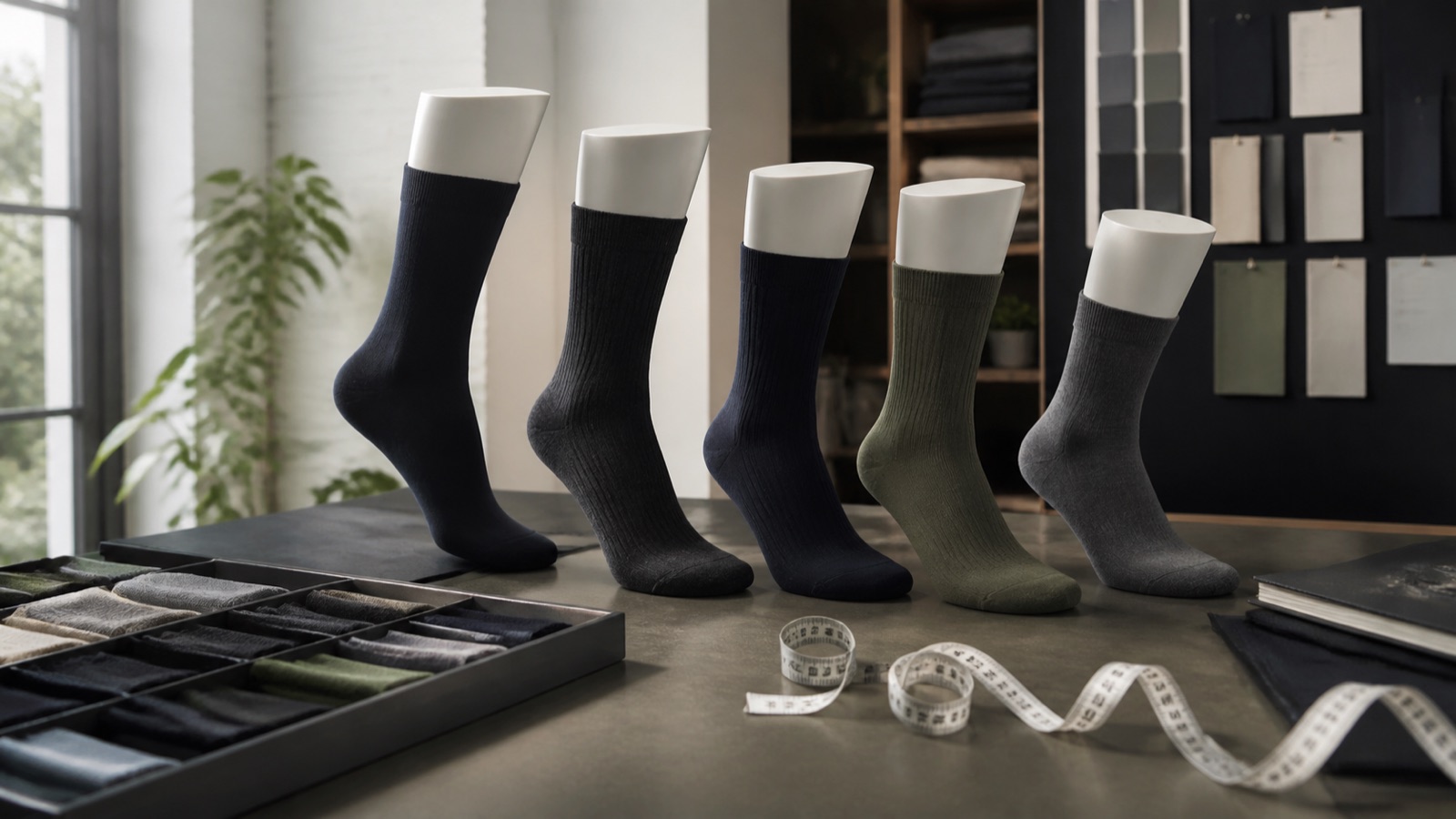
Do not approve a multi-size program based on one middle size. Test the smallest and largest intended ranges and confirm artwork placement, heel position and cuff behavior. Pattern scale may need adjustment so the range looks coordinated.
Wear tests should include different foot shapes where practical. Record whether feedback relates to length, width, cuff, toe or general stretch.
Communicate sizes clearly
Packaging and product pages should use a consistent regional size chart. If selling internationally, list conversions carefully and avoid implying precision that the product cannot deliver.
Keep the final size chart linked to the approved measurement specification so ecommerce copy, packaging and production stay aligned.
Build a size architecture for the sales channel
Choose grouped sizes that balance wearer coverage, inventory complexity and clear labeling. Ecommerce brands may need precise conversion guidance, while uniform programs may prioritize efficient distribution across a known workforce.
Use fit-test notes to explain heel position, toe room and cuff comfort at the lower and upper boundary of each range. These observations are more useful than shoe-size conversion alone.
- Map wearer data to size groups
- Test range boundaries
- Write clear conversion labels
- Review returns by size after launch
International sizing and fit checklist
Shoe-size conversion is only the starting point. Yarn stretch, knit construction, foot length, cuff and wearer expectations determine how a sock fits across regional markets.
Test boundary sizes as well as the middle of each range. Broad one-size claims may reduce SKU count but can create poor heel placement or excessive tension for some wearers.
- Define the target regional size system
- Record finished measurements and stretch
- Fit-test lower, middle and upper boundary sizes
- Check label and packaging conversions
- Control grading rules between sock sizes
Frequently asked questions
Can one bamboo sock size fit several shoe sizes?
Yes, stretch allows grouped sizing, but the range must be validated. Too broad a range can affect heel position, toe comfort and cuff tension.
Should men’s and women’s sizes use the same construction?
Not always. Target foot dimensions, calf fit, styling and market conventions may justify separate specifications even when some shoe sizes overlap.
How are international sizes shown on packaging?
Brands often display relevant EU, UK, US or local conversions. Verify the conversion table and ensure the physical product has been fit-tested for the stated range.
Plan your custom bamboo sock project.
Reliable sizing combines measurement charts, stretch behavior and real fit evaluation. Share your destination markets and target wearer so we can recommend a sensible size architecture.
Specifications, claims, testing, labeling and compliance should be confirmed for the exact product and destination market. This guide is general sourcing information, not legal or medical advice.