Understanding the bamboo label
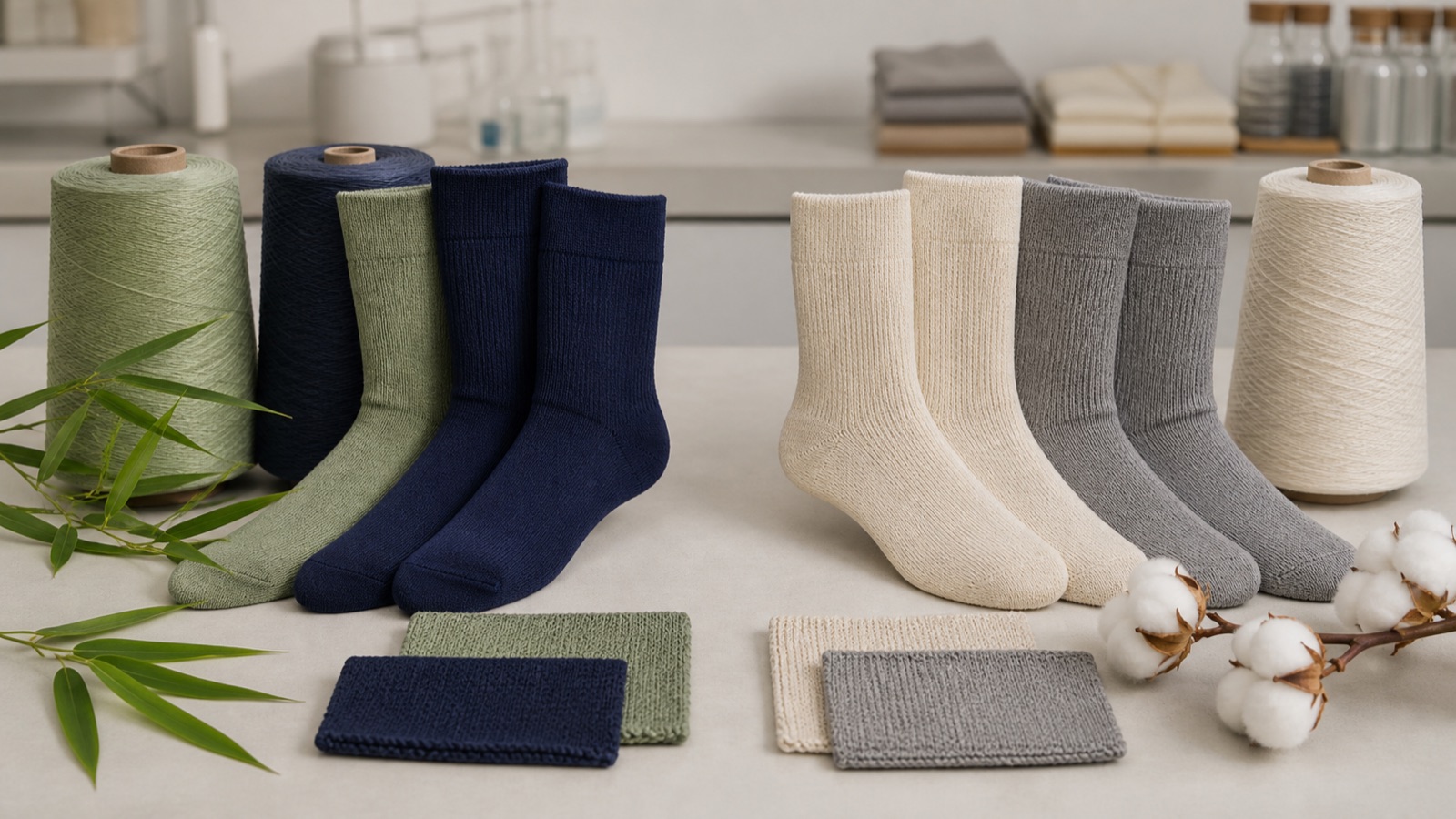
Many products sold as bamboo socks use regenerated cellulose fiber made from bamboo feedstock, commonly labeled bamboo viscose or viscose derived from bamboo depending on market rules. The original plant material is processed into a spinnable fiber, so buyers should use accurate terminology rather than implying that intact bamboo fibers are simply knitted into a sock.
Labeling rules vary by market. Brands should verify the required generic fiber name and avoid claims that cannot be supported by supplier documentation or testing.
Why most socks are blends
A sock must stretch over the foot, recover after wear and withstand repeated friction. For that reason, bamboo-derived viscose is commonly combined with reinforcement and stretch fibers. The exact blend may be distributed differently across the sock rather than appearing uniformly in every knitted zone.
- Bamboo-derived viscose for the main hand feel
- Polyamide or polyester for strength and knitting stability
- Elastane for fit and recovery
- Specialty yarns only when the product brief requires them
Percentage is only one specification
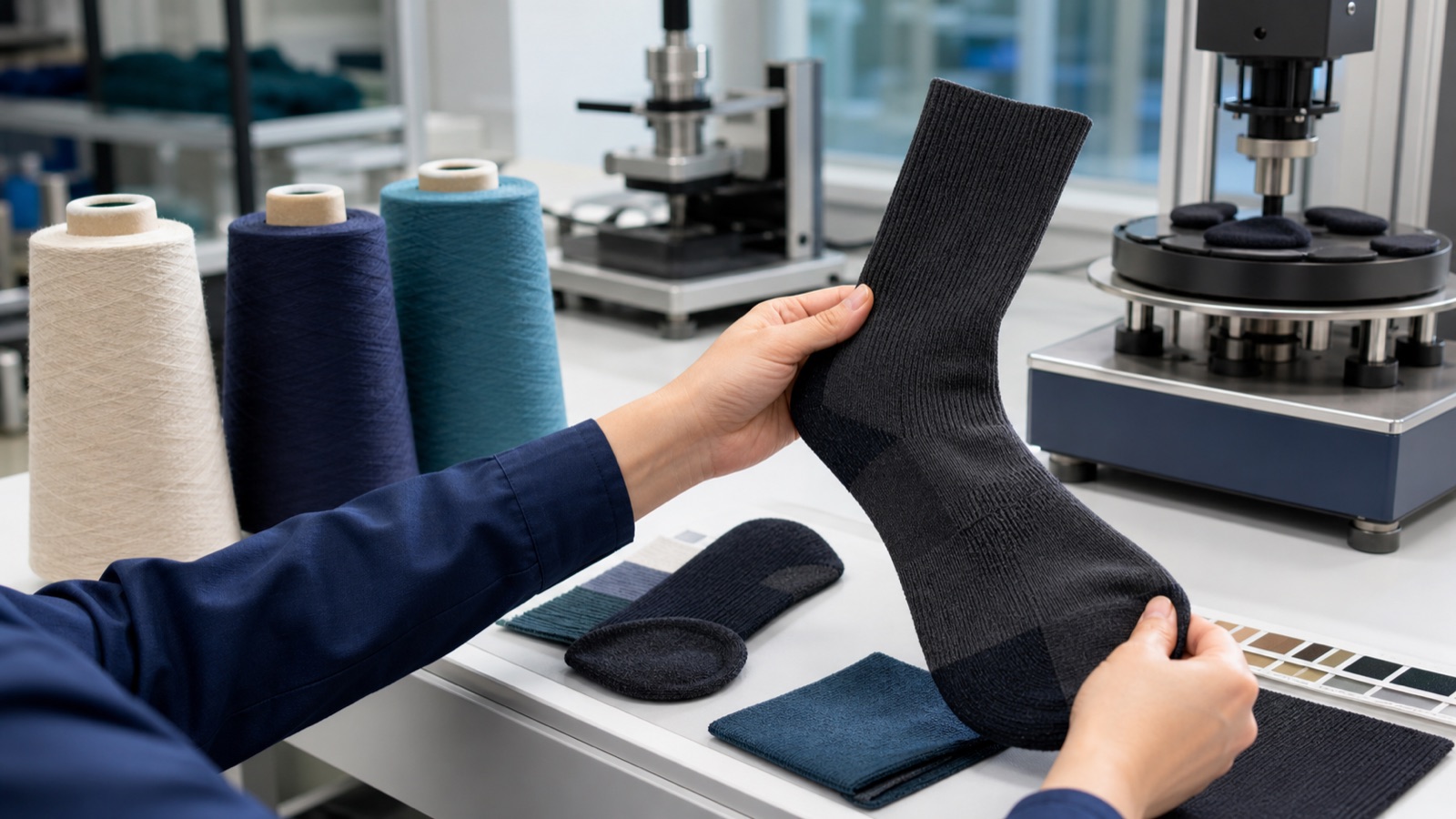
A higher bamboo-viscose percentage does not automatically create a better sock. Yarn quality, stitch density, reinforcement, toe construction and finishing all influence comfort and durability. A technically balanced blend may outperform a higher-percentage claim that lacks sufficient recovery.
Ask the supplier to explain the intended role of each fiber and how the construction supports the use case. This is especially important for high-wear, athletic or compression-style products.
Questions for supplier documentation
Request the final fiber composition, care instructions, origin information and any test reports relevant to planned claims. Confirm whether composition is calculated for the whole product and how elastics or decorative components are treated under the destination market’s labeling rules.
Accurate product copy builds trust. It is better to describe verified softness, construction and intended use than to rely on broad environmental or health statements.
Create a product data sheet for accurate selling
A useful data sheet records the final fiber composition, product weight or construction, size range, care method, origin information and evidence for any performance statement.
Share the controlled data with ecommerce, packaging and sales teams so the same terminology appears across every channel. Update the document whenever the specification changes.
- Use final production composition
- Align packaging and web copy
- Store supporting documents
- Version every approved change
Composition and labeling checklist
Most bamboo socks combine bamboo-derived regenerated cellulose with reinforcement and stretch yarns. The blend is engineered to balance smoothness, fit, knitting stability and wear rather than maximize one marketing percentage.
Product descriptions should use the generic fiber terminology required in the sales market. Documentation and testing should support any claim that goes beyond basic composition and construction facts.
- Request final fiber percentages
- Confirm the generic fiber name for labeling
- Understand the purpose of supporting yarns
- Check whether composition covers the complete product
- Align care instructions with the tested sample
Frequently asked questions
Are bamboo socks knitted directly from bamboo plant fibers?
Common commercial bamboo socks generally use regenerated cellulose such as viscose made from bamboo feedstock. The material is processed into spinnable fiber, then blended and knitted into the finished sock.
Why do bamboo socks contain nylon or elastane?
Supporting yarns help the sock stretch, recover, remain stable in knitting and resist wear in high-friction areas. Their amount and placement should match the intended product rather than a universal formula.
Does a higher bamboo percentage mean higher quality?
No single percentage defines quality. Yarn grade, density, reinforcement, toe construction, finishing and fit all affect the result. A balanced specification can offer better everyday performance.
Primary references used in this guide.
These official references support the material, labeling, testing or regulatory context. Product requirements still need confirmation for the exact construction and destination market.
Plan your custom bamboo sock project.
Accurate composition information supports compliant labels and credible product copy. We can help translate a comfort, dress, fashion or compression brief into a practical bamboo-blend specification.
Specifications, claims, testing, labeling and compliance should be confirmed for the exact product and destination market. This guide is general sourcing information, not legal or medical advice.