Why MOQ varies by project
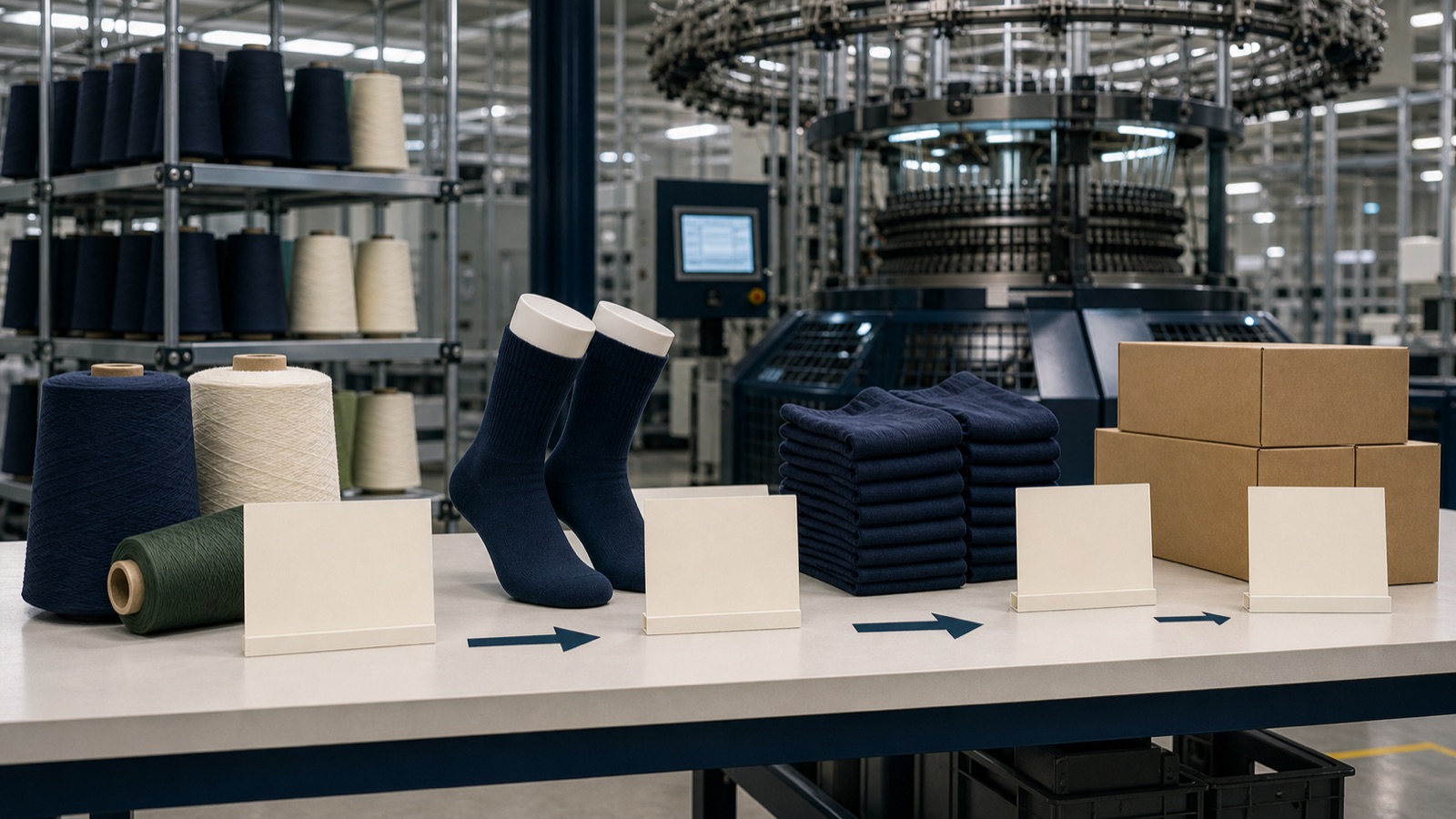
Minimum order quantity is not only a factory policy. It can be influenced by yarn color requirements, knitting setup, size allocation, packaging print quantities and the efficiency of the production run. A plain sock using available yarn may support a different starting quantity from a multi-color jacquard design with custom boxes.
Buyers should ask whether an MOQ applies per style, per color, per size or per order. That distinction determines how many sellable variants can fit inside the opening budget.
Use a sample strategy
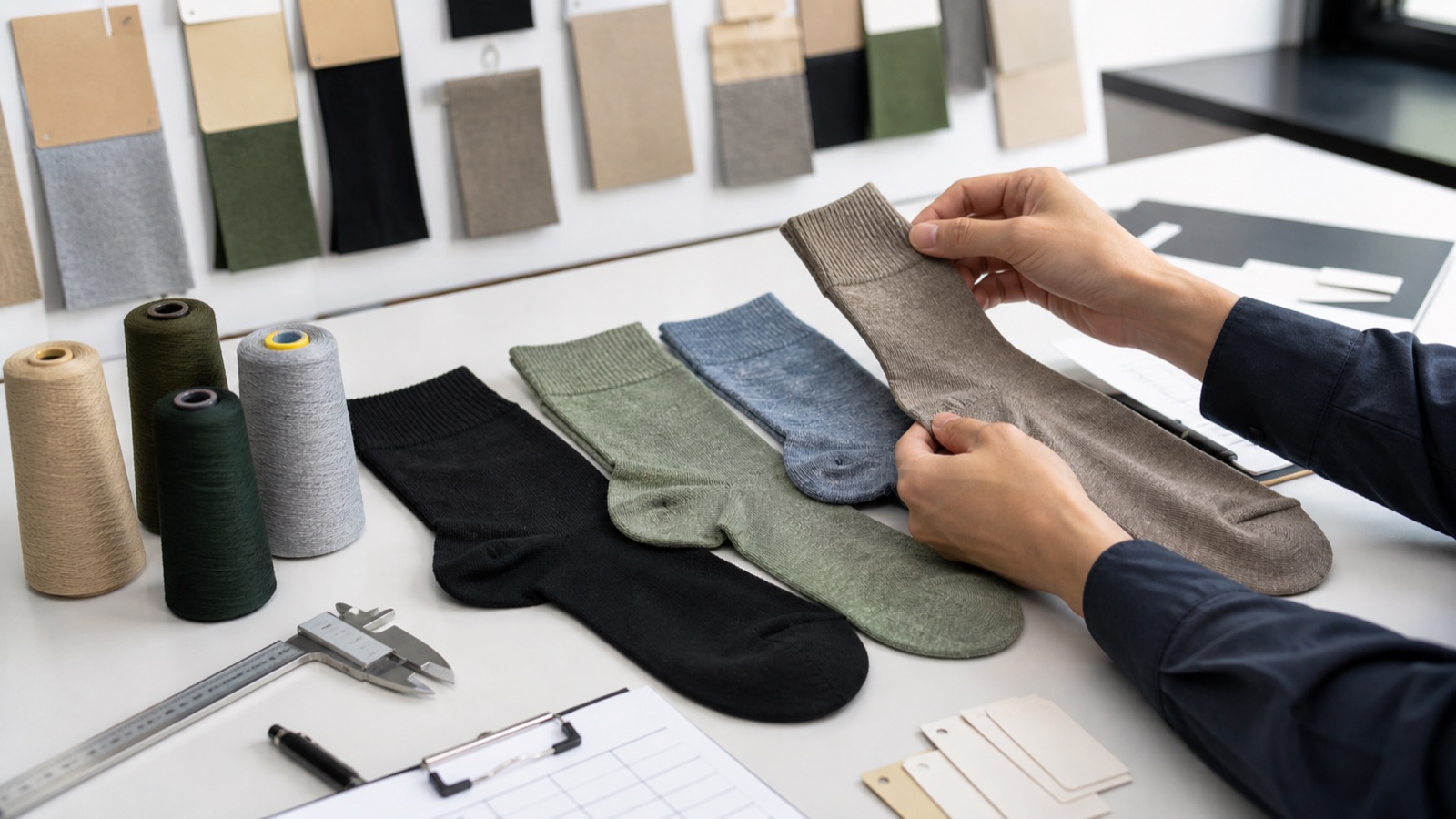
Development samples answer different questions. A construction sample checks fit and feel, a color sample confirms visual direction, and a pre-production sample can become the final approval standard. Combining every decision into the first sample is attractive, but it may slow progress when artwork or packaging is not ready.
- Confirm what the sample includes
- Ask whether custom-dyed yarn is required
- Define the number of revisions in the plan
- Separate product approval from packaging approval when useful
How to reduce avoidable cost
Prepare complete artwork, measurement targets and reference photos before sampling. Select a realistic color range instead of requesting many speculative variants. If several styles share the same base yarn or packaging format, discuss them together so the supplier can identify practical efficiencies.
Avoid choosing the lowest sample cost without checking what will be delivered. A sample that does not follow the intended production construction may not help the buying decision.
Information that improves a quotation
Send the product type, blend preference, quantity by style and color, size range, artwork status, packaging concept, market and target date. If some details are unknown, state that clearly and identify the commercial priority.
A useful quotation should explain its assumptions. Buyers can then compare suppliers on equivalent scope rather than comparing totals built around different materials or packaging.
Build a sampling budget that answers real questions
Allocate sample spending according to risk. New constructions, custom colors and technical products deserve more physical review than a repeat of an approved basic style.
List the decision each sample must support and the people responsible for approval. This prevents speculative variants from consuming time while important fit or packaging questions remain unresolved.
- Prioritize construction risk
- Set revision responsibility
- Combine related color reviews
- Approve production standards in writing
MOQ and sample planning checklist
MOQ should be evaluated at style, color, size and packaging level. A quoted total can be misleading if the allocation rules make the planned assortment impossible to produce.
Use samples to answer defined questions in sequence. Construction and fit can be checked before every color and printed packaging component is ready, which reduces avoidable revisions.
- Ask whether MOQ applies per style or per color
- Confirm available and custom-dyed yarn options
- Define sample purpose and revision allowance
- Separate sock and packaging approval where useful
- Include size and color quantities in the quotation request
Frequently asked questions
Why do custom bamboo sock MOQs vary?
Yarn availability, dyeing, knitting setup, number of colors, size allocation and packaging print quantities all affect the economical starting point. A plain stock-color crew can therefore differ from a custom jacquard gift set.
Can buyers order below the stated MOQ?
Sometimes the specification can be simplified or combined with available materials, but this depends on production reality. Ask which element drives the minimum instead of requesting a lower number without changing the scope.
What should be approved on a sock sample?
Review measurements, fit, hand feel, cuff, toe seam, heel placement, colors, artwork clarity and finishing. When packaging is included, also inspect the complete folded and labeled presentation.
Plan your custom bamboo sock project.
A transparent MOQ breakdown and staged sample plan help protect the budget while preserving the important product details. Send your quantity, variants and artwork status for a project-specific review.
Specifications, claims, testing, labeling and compliance should be confirmed for the exact product and destination market. This guide is general sourcing information, not legal or medical advice.