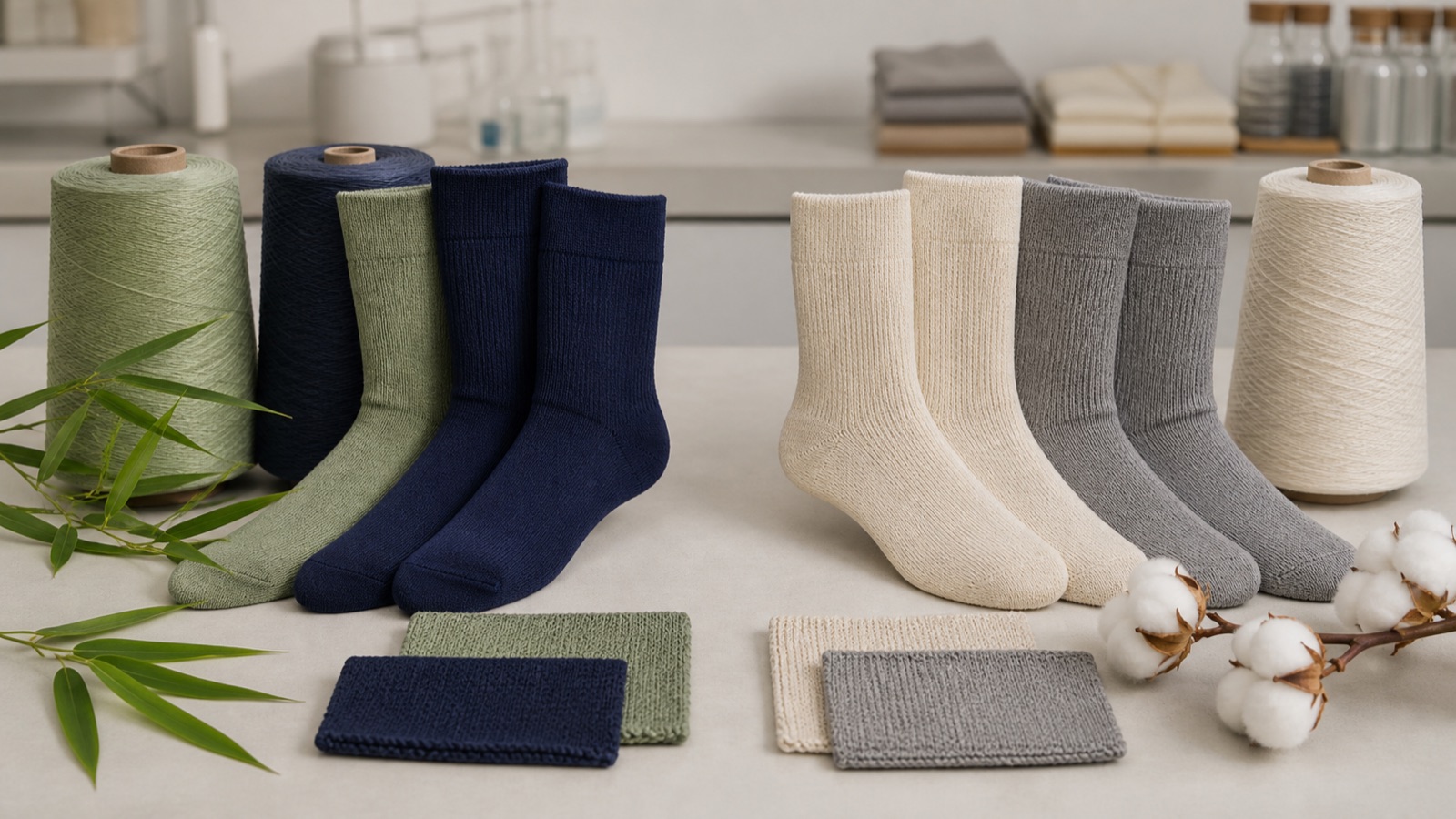
Durability begins with the use case
A lounge sock, daily office sock and work boot sock face different levels of friction and washing. Before choosing a blend, define how frequently the product will be worn, what footwear it will meet and how the consumer is expected to care for it.
Without that context, suppliers may either overbuild the sock and raise cost or create a soft sample that does not match real-world wear.
Supporting fibers have a purpose
Bamboo-derived viscose contributes to the main hand feel, while polyamide, polyester and elastane may support strength, abrasion resistance, fit and recovery. Fiber quality and placement can be more useful than maximizing a single headline percentage.
- Reinforce heel and toe wear zones
- Use elastane to support recovery
- Match yarn count to knit density
- Avoid overly loose construction for high-wear uses
Construction and finishing
Stitch density, terry cushioning, toe linking, boarding and finishing all influence how a sock performs. A balanced product should retain its intended shape without feeling rigid. Ask the sample team to explain any visible differences between the prototype and final production method.
Dark colors, brushing and special finishes may also affect surface appearance after washing, so evaluate the exact planned version.
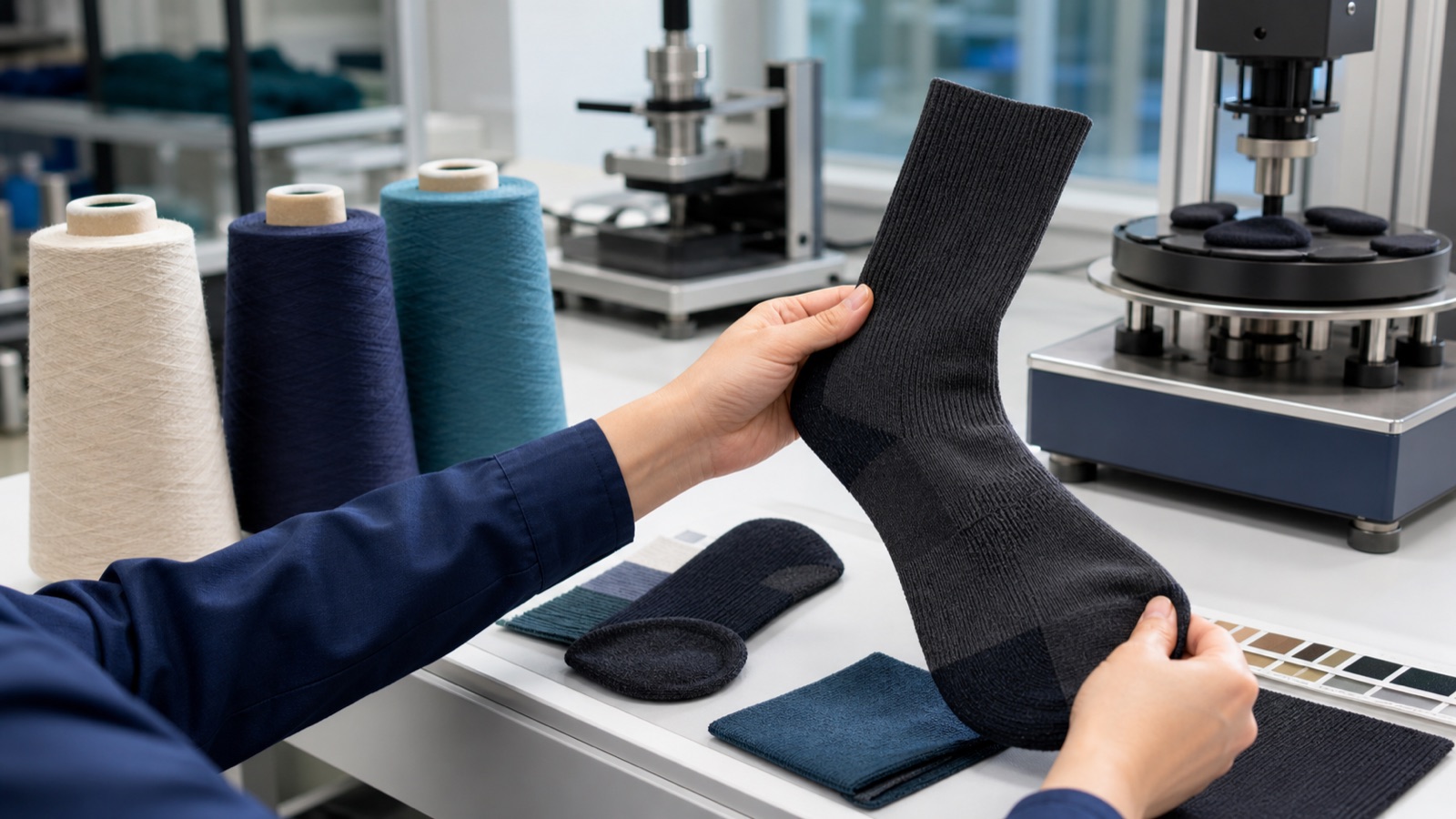
Create a repeatable test plan
Use controlled wash and wear cycles, record dimensional change and inspect pilling, thinning, holes and cuff recovery. Compare samples against a reference product at a similar weight and price tier.
Durability claims should be supported by defined tests. For most retail copy, precise construction facts are safer than broad promises such as “lasts forever.”
Use wear testing to improve the next order
Record where damage occurs rather than describing a sock only as durable or weak. Heel thinning, toe abrasion, pilling and loss of cuff recovery point to different specification changes.
Compare the findings with footwear, washing and wearer behavior. A targeted adjustment can improve the next order without adding unnecessary weight or synthetic content throughout the entire sock.
- Map the location of wear
- Separate pilling from abrasion
- Measure recovery and shrinkage
- Change only the relevant construction zone
Durability review checklist
Durability should be designed around footwear, wear frequency and care behavior. A lightweight office sock and a cushioned work style need different reinforcement, density and yarn balance.
Test the exact colored and finished sample. Dye, brushing, knit density and finishing can influence appearance and recovery after washing.
- Define expected wear and footwear
- Reinforce heel and toe zones
- Measure recovery after washing
- Inspect pilling and surface thinning
- Compare against a similar weight reference
Frequently asked questions
What makes bamboo socks more durable?
Appropriate reinforcement yarns, stitch density, heel and toe construction, stable elastane and controlled finishing all contribute. Fiber percentage alone cannot predict lifespan.
Do softer bamboo socks wear out faster?
Softness does not automatically mean poor durability, but an overly loose or under-reinforced construction may wear quickly. Buyers should balance hand feel with the intended footwear and use.
How should a brand test durability?
Use defined wash and wear cycles, record measurements and inspect pilling, thinning, holes and cuff recovery. Compare products with similar weight and price targets.
Plan your custom bamboo sock project.
Durable bamboo socks come from a balanced specification and realistic testing program. Tell us the intended wearer and use environment to develop the right reinforcement direction.
Specifications, claims, testing, labeling and compliance should be confirmed for the exact product and destination market. This guide is general sourcing information, not legal or medical advice.