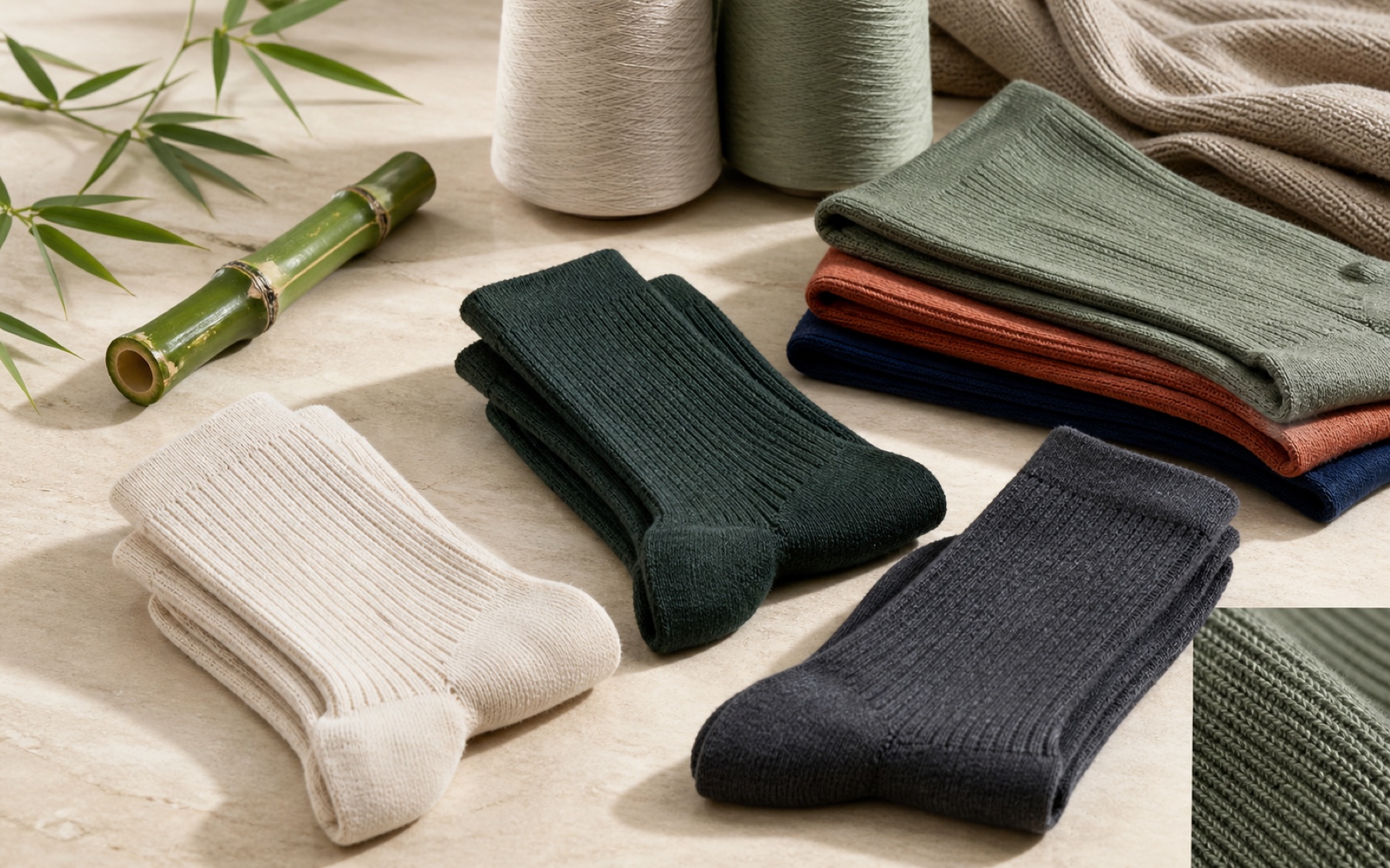
Compare finished products, not isolated fibers
Bamboo-viscose socks are often selected for a smooth, soft hand feel and fluid drape, while cotton remains familiar, versatile and available in many yarn formats. Yet the final experience depends on the entire blend, yarn quality, knit density and finishing. Two socks with the same headline fiber can feel and wear very differently.
A useful comparison therefore begins with matched product specifications. Evaluate similar weights, constructions and price levels. Otherwise a premium compact-spun cotton sock may be compared with an entry-level bamboo blend, producing a misleading conclusion.
Where bamboo-viscose blends can fit
Bamboo-derived viscose is commonly considered for everyday, dress, lounge and comfort-led collections. Its smooth touch can support a premium story, but it normally needs reinforcing fibers and elastane to deliver stable fit and wear. The ideal percentage depends on product type rather than a universal formula.
- Soft everyday crews and dress socks
- Comfort-led basics and gifting programs
- Lightweight fashion styles
- Selected compression-style constructions when technically validated
Where cotton remains useful
Cotton offers a broad supply base and is familiar to both product teams and consumers. It can work across casual, athletic and workwear programs when the appropriate yarn and construction are selected. Buyers may also prefer cotton when matching an established assortment or when local labeling and marketing conventions make it easier to communicate.
Neither material eliminates the need for nylon, polyester or elastane. Those supporting fibers can improve recovery, durability or knitting performance, and their placement may matter as much as the headline percentage.
Build a fair wear test
Ask for samples in the target construction and test fit after repeated wear and washing. Record dimensional change, pilling, surface appearance, heel and toe wear, cuff recovery and wearer feedback. Care instructions should match the actual product rather than generic fiber advice.
For purchasing decisions, compare total product value: target cost, return risk, expected lifespan, brand positioning and the evidence available for any performance claim.
Turn material testing into a buying decision
Create a scorecard covering hand feel, fit, recovery, surface appearance, wash change, target cost and customer positioning. Weight each category according to the actual sales channel rather than treating every property equally.
A dress collection may prioritize smoothness and shoe fit, while a work or everyday program may give more weight to reinforcement and repeat washing. The selected fiber direction should serve the finished product brief.
- Use matched construction samples
- Test after repeated washing
- Gather wearer feedback consistently
- Link results to price and channel
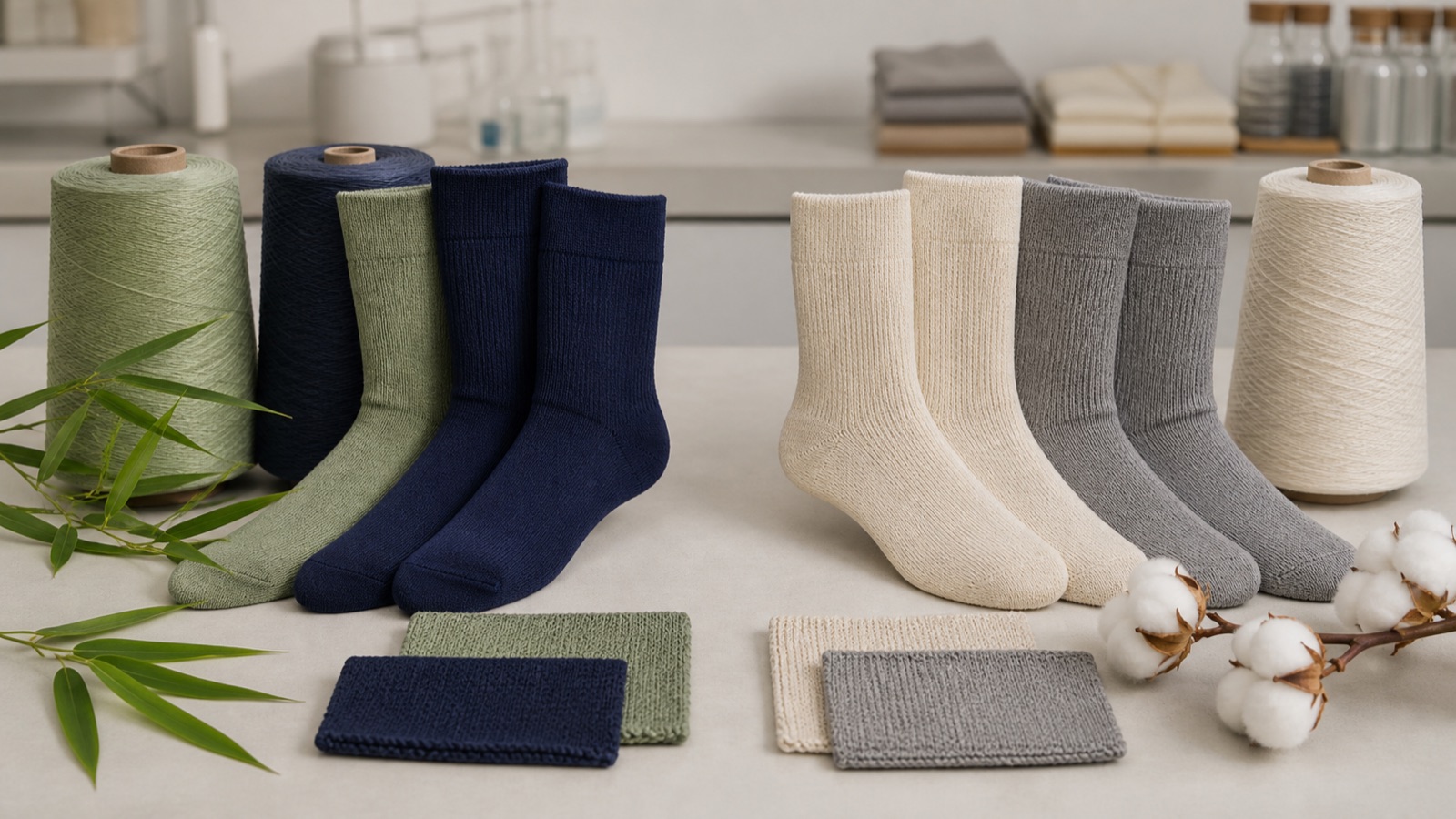
A fair bamboo viscose and cotton comparison
Compare socks built to similar weight, gauge, reinforcement and price targets. Fiber names can influence positioning, but the finished construction determines how the product feels, fits and performs after repeated use.
For a new collection, ask for matched prototypes and use a written wear-test scorecard. This gives product, sales and purchasing teams a shared basis for choosing the material direction.
- Match sock weight and knitting gauge
- Compare dry and after-wash hand feel
- Measure shrinkage and cuff recovery
- Inspect heel, toe and surface wear
- Review labeling language for the destination market
Frequently asked questions
Are bamboo viscose socks always softer than cotton socks?
Bamboo-derived viscose is often selected for a smooth hand feel, but yarn quality, finishing and knit density can change the result. Buyers should compare finished samples rather than assuming softness from the fiber percentage alone.
Which material is better for private-label socks?
The better choice depends on wearer expectations, price, construction and brand positioning. Bamboo blends can support a comfort-led range, while cotton offers familiarity and broad sourcing options. Both normally include reinforcement and stretch fibers.
Should buyers choose the highest bamboo percentage?
Not automatically. A balanced blend may provide better recovery and durability than a higher headline percentage. Ask how each supporting fiber contributes to fit, abrasion resistance and knitting stability.
Plan your custom bamboo sock project.
Use side-by-side samples and repeatable testing to select the blend that supports your price point and customer promise. We can develop matched bamboo-viscose and cotton directions for an informed review.
Specifications, claims, testing, labeling and compliance should be confirmed for the exact product and destination market. This guide is general sourcing information, not legal or medical advice.