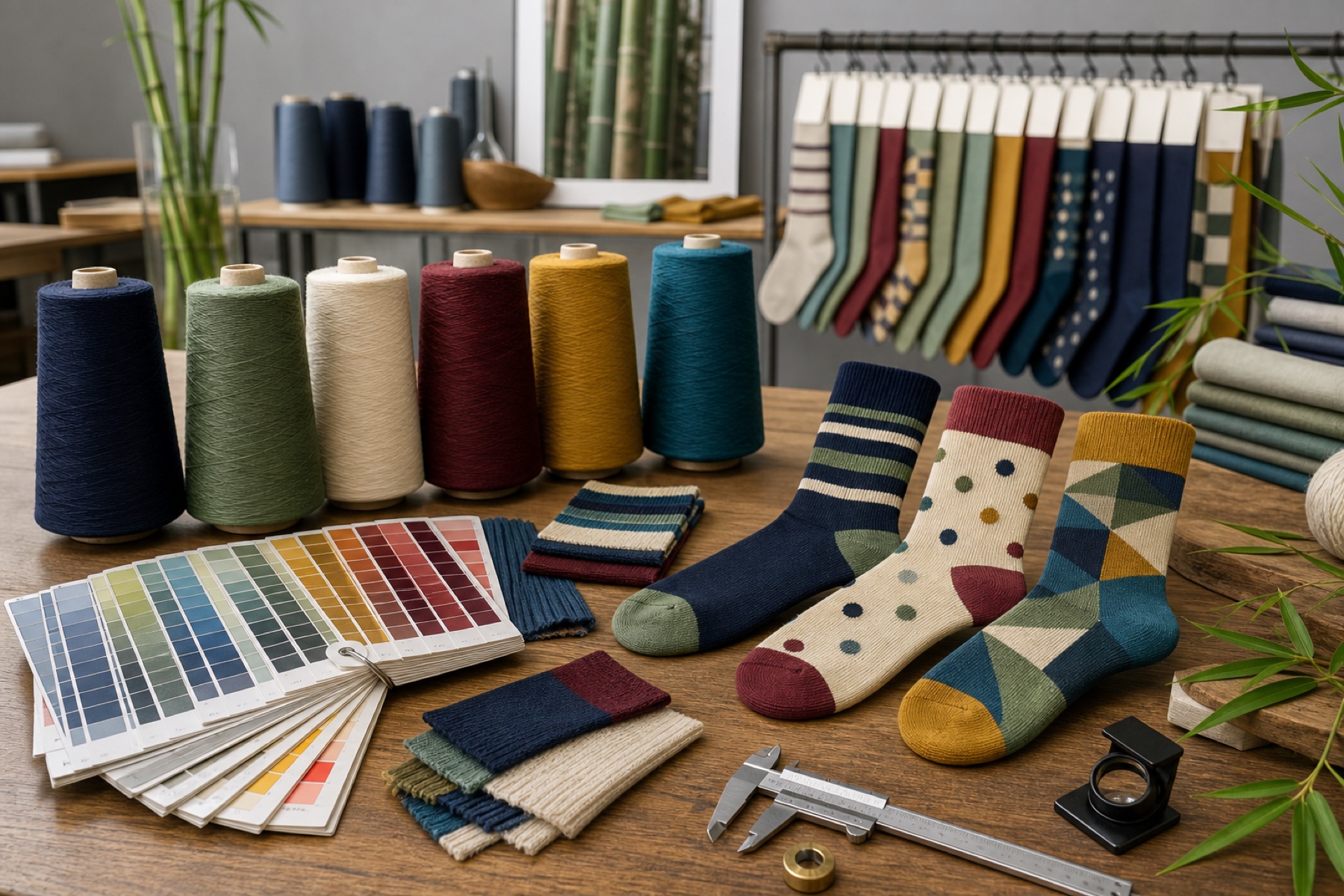
What is a sock industry color card?
A sock color card is a physical reference library used to compare available yarn shades before sampling. It may be organized by fiber type, yarn supplier, dye lot or internal factory code. For custom bamboo socks, the relevant card should represent the yarn system that will actually be knitted—not a paper swatch or screen value selected only for appearance.
Color cards help buyers see which shades can use an available yarn and which may require custom dyeing. That difference can affect minimum quantities, sample timing, cost and repeat-order planning. A professional sock design team can use the card to build a workable palette while protecting the most important brand colors.
- Available-yarn shade references
- Yarn supplier or internal color codes
- Fiber and yarn-system identification
- Physical review under controlled lighting
- Records for samples and repeat orders
Why screen colors are not enough for yarn approval
RGB, hexadecimal and digital artwork values are useful for communication, but every screen displays them differently. Yarn also reflects light through fibers and texture, so a physical knitted shade may appear lighter, softer or more complex than a flat digital block. Neighboring colors, stitch density and stretch can change the result again.
Provide a recognized physical reference, material sample or approved color card code for critical shades. If only a digital value is available, treat the first physical yarn or knitted sample as the real approval point. Photographing the sample is useful for records, but the photo should not replace the retained physical standard.
How to build a balanced bamboo sock color palette
A commercial range usually needs a hierarchy. Core colors such as black, navy, charcoal, cream or other market-relevant neutrals support repeat business. Seasonal accents create freshness, while one or two signature brand colors help the range feel distinctive. Reusing selected shades across styles can also simplify sourcing and make the collection look coordinated.
Patterned bamboo socks require more than choosing attractive individual chips. Test the colors together at knitted scale. Fine stripes can visually blend, small dots may lose contrast, and heel or toe blocks may make an accent shade feel much stronger. Our sock designers can prepare several colorways around one base pattern before the buyer selects physical samples.
- Define core, seasonal and signature colors
- Reuse selected yarns across related styles
- Check contrast at stitch scale
- Review the palette flat, on foot and in packaging
- Limit custom-dyed shades to commercially important colors
Color approval and control from sample to reorder
For each approved shade, record the reference system, yarn code, fiber or yarn type, sample style, approval date and acceptable viewing condition. Keep the color record with the product specification and sealed sample. This is especially important when a brand returns months later for a repeat order.
Yarn dye lots can show variation, and the same shade can look different in another knit construction. Confirm whether the reorder uses the same yarn source and whether a new lab dip, yarn winding or knitted strike-off is needed. Final inspection should compare production against the controlled reference and any agreed tolerance rather than a memory or online image.
Use color cards to support assortment and MOQ planning
Color selection is also a commercial decision. When several styles share approved available yarns, buyers may build a more coherent assortment and reduce the number of unique materials that must be prepared. Custom-dyed brand shades can then be reserved for products where exact identity is most visible.
Create a color matrix listing every style, base color, accent color, heel and toe treatment, physical reference, yarn code and sample status. The matrix helps the professional sock design team, purchasing team and factory identify duplicated shades, approval gaps and possible reorder risks before production begins.
- Map colors across every style and colorway
- Separate available yarn from custom dyeing
- Reuse core shades where commercially useful
- Record approval status and physical standard
- Connect the final palette to packaging artwork
Sock color card and yarn approval checklist
A reliable bamboo sock color approval combines a recognized physical reference with the exact yarn system and knitted construction. Digital values can guide artwork, but the retained yarn or knitted sample becomes the practical production standard.
Separate critical brand shades from flexible supporting colors. This helps the design and production teams focus custom dyeing, sampling and tolerance decisions where visual consistency has the greatest commercial value.
- Identify critical, seasonal and flexible colors
- Use physical yarn cards or recognized material references
- Record yarn supplier and internal color codes
- Approve colors on the final knit construction
- Retain a sealed sample for repeat-order comparison
Frequently asked questions
What is a sock yarn color card?
It is a physical set of yarn shade references, usually identified by supplier or factory codes. Buyers use it to select available colors, compare alternatives and record the shade used for sampling and production.
Can a sock factory match a Pantone or brand color?
A recognized color reference can guide matching, but the result must be reviewed in the actual yarn and knitted sock. Fiber texture, dyeing, stitch density and neighboring colors can affect visual appearance.
Why can two production lots look slightly different?
Yarn dye lots, material source, finishing and viewing conditions can create variation. Maintain approved physical standards, agreed tolerances and controlled yarn information for reorders.
Explore the pattern-specific bamboo sock guides.
Go deeper into artwork scale, color planning, knitting limits and private-label presentation for each adult fashion direction.
Plan your custom bamboo sock project.
A controlled color system reduces sample revisions and helps a custom bamboo sock range remain recognizable across styles and repeat orders. Share your palette, artwork and critical brand references for a color-card review.
Specifications, claims, testing, labeling and compliance should be confirmed for the exact product and destination market. This guide is general sourcing information, not legal or medical advice.