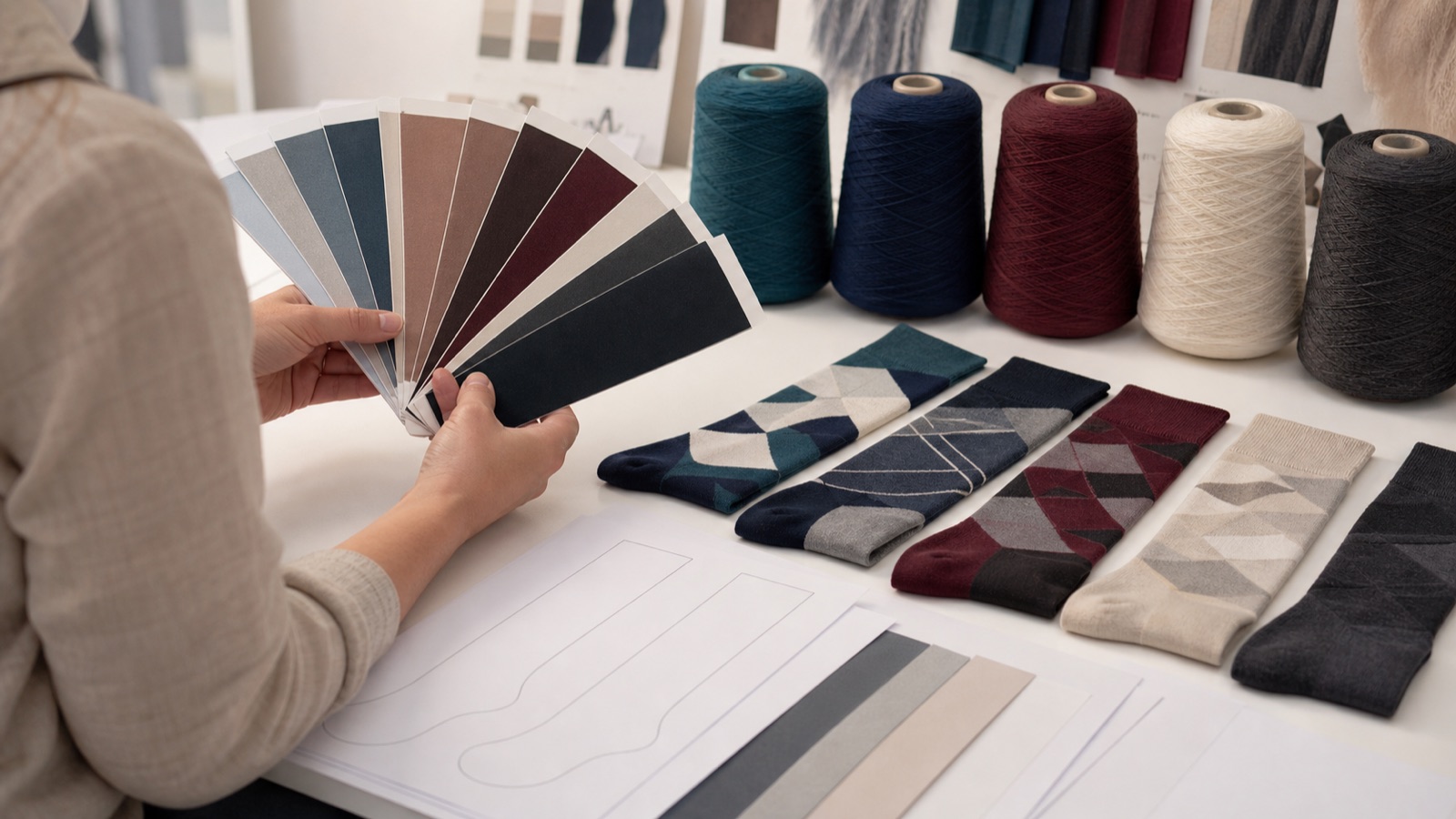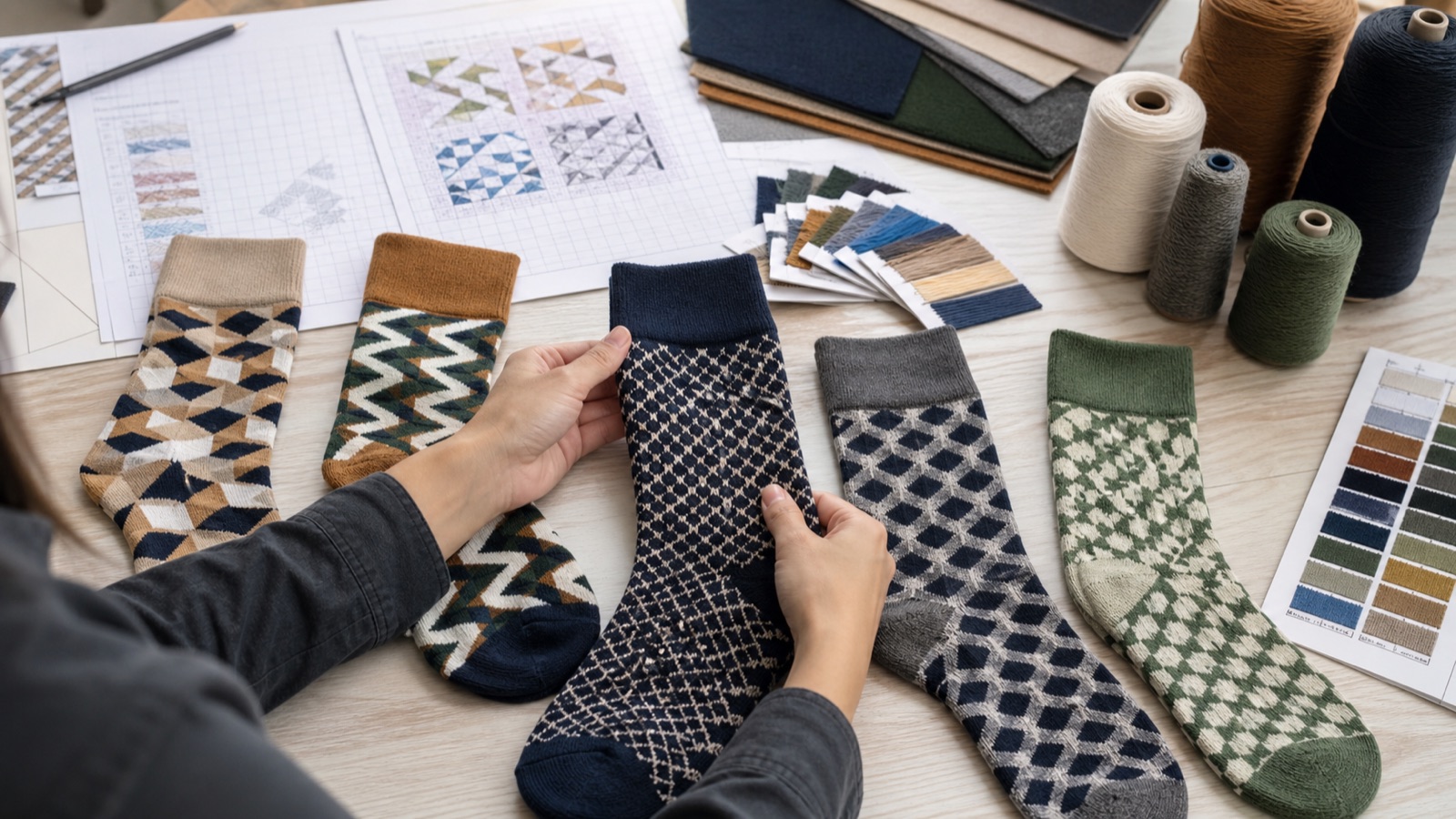
Design for the knitted surface
Sock artwork is interpreted through stitches, stretch and the three-dimensional shape of the leg and foot. A design that looks precise on a screen may change when knitted and worn. Begin with the available knitting resolution, number of colors and the product size rather than treating the sock like a printed poster.
Large, simple motifs often remain clearer than thin lines or small lettering. The supplier can help convert vector artwork into a repeat that works with the machine and construction.
Plan the repeat and viewing angles
Decide whether the main motif should face outward, repeat around the leg or appear as an all-over pattern. Consider where the heel, toe, cuff and size transitions interrupt the artwork.
- Front, side or all-over placement
- Repeat height and width
- Maximum colors in one knitting row
- Background color and float management
- Artwork variation across sizes
Control color with references
Screen color is not a reliable production standard. Use recognized color references or physical samples and identify which colors are critical. Available yarn colors may provide a faster path, while custom dyeing can affect minimum quantities and timing.
Review the knitted sample because adjacent yarn colors and stitch texture influence visual perception. Approving loose yarn alone is not enough for a complex pattern.
Give actionable sample feedback
Mark comments directly on images and identify the exact motif or area. Separate artwork changes from fit and construction changes. If scale must change, provide a target measurement instead of saying only “make it bigger.”
Keep the approved artwork file and sample together as the repeat-order reference.
Create an artwork approval pack
Combine the vector source, reduced knit chart, color references, placement drawing and sample photographs in one approved pack. Name every colorway and size variant clearly.
A complete approval pack helps purchasing, design and the factory work from the same reference, especially when the collection is reordered months later or extended into new silhouettes.
- Archive source and knit files
- Mark scale and orientation
- Name every colorway
- Link files to the approved sample
Knit-ready pattern checklist
Artwork must work within stitch resolution, color limits and the changing shape of the sock. Simplifying fine lines and controlling motif scale usually improves clarity after knitting and stretching.
Approve patterns on the intended sizes because repeats may land differently across the range. Physical yarn colors and a worn sample reveal issues that a flat digital mockup cannot show.
- Provide vector artwork when possible
- Identify motif placement and repeat direction
- Limit colors to the machine and construction
- Approve physical yarn references
- Check pattern appearance on every key size
Frequently asked questions
Can any illustration become a knitted sock pattern?
Many designs can be adapted, but tiny text, gradients and very fine lines may require simplification. The artwork should be translated into stitch-level geometry and reviewed on a sample.
How many colors can a custom sock use?
The practical number depends on the machine, construction and colors appearing in the same knitting row. More colors may affect stretch, thickness, production efficiency and cost.
Why does the motif change when the sock is worn?
Knitted fabric stretches around the leg and foot, altering proportion and spacing. Placement and scale should therefore be approved both flat and on the intended wearer size.
Plan your custom bamboo sock project.
The best custom patterns preserve the brand idea while respecting the knitted surface. Send vector artwork, target colors and sock sizes so our team can plan a workable sample.
Specifications, claims, testing, labeling and compliance should be confirmed for the exact product and destination market. This guide is general sourcing information, not legal or medical advice.