Compression is a technical specification
A compression-style sock is not defined by appearance alone. Graduated pressure, sizing, circumference measurements, yarn tension and construction must work together. Buyers should state whether they want a lifestyle support product or a medically positioned product, because the testing, labeling and regulatory responsibilities may be very different.
Do not publish pressure levels or medical benefits based only on a sample description. Claims should match an approved specification and appropriate test evidence for the intended market.
Where bamboo blends enter the design
Bamboo-derived viscose may be incorporated to support a smooth hand feel and comfort-led positioning, while stronger and more elastic yarns provide structure and recovery. The blend must be selected around the compression construction rather than added as a marketing percentage after the design is complete.
- Knee-high or other approved silhouette
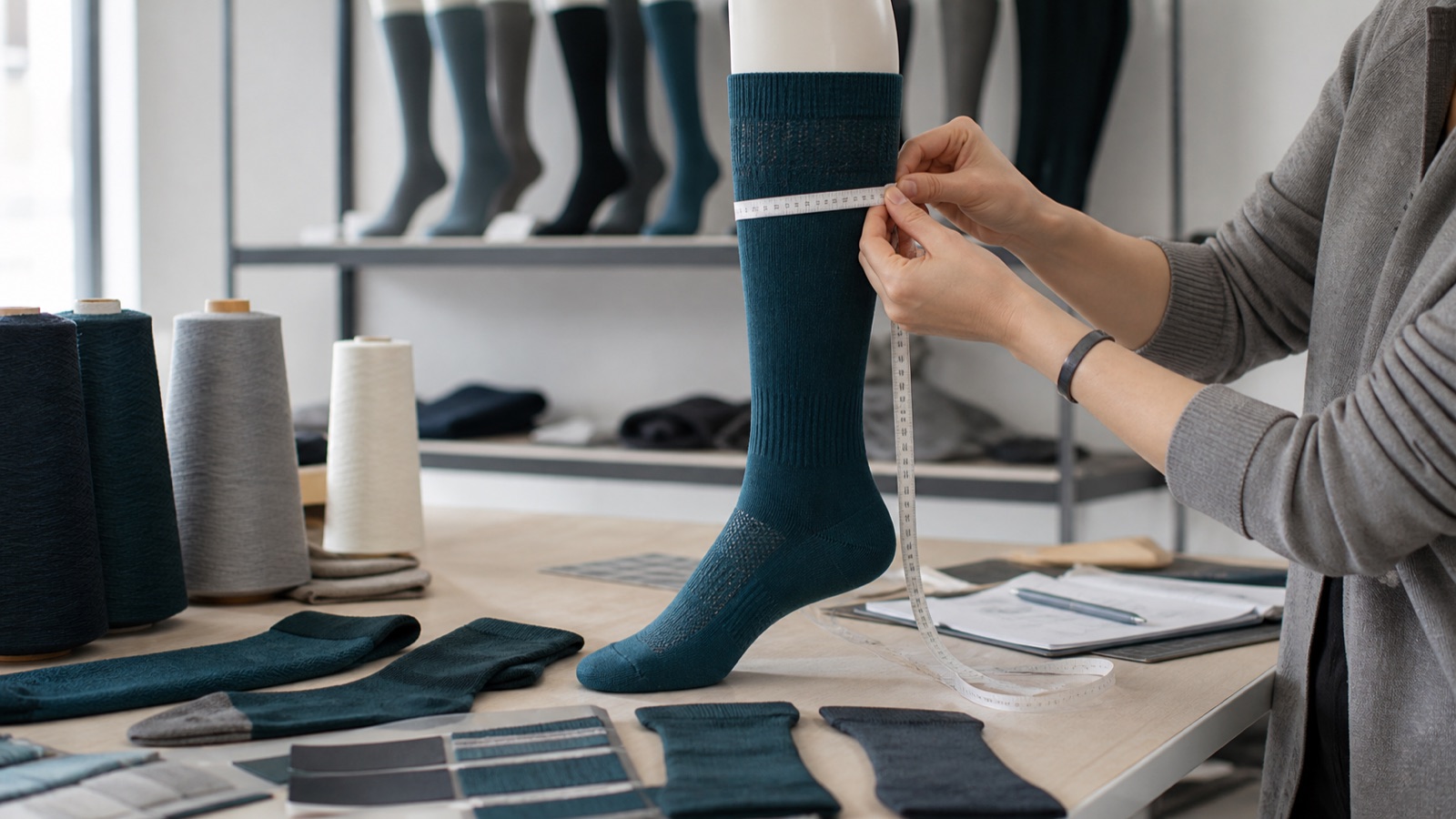
- Defined size and calf circumference range
- Target pressure profile and test method
- Cuff comfort and stay-up performance
- Reinforced heel and toe where required
Sampling and wear evaluation
Compression samples should be reviewed on the intended size range, not just one model. Check ease of donning, cuff behavior, toe comfort, heel placement and recovery after wear. If a product will be sold for long shifts or travel, include realistic wear scenarios in the evaluation.
Color, pattern and branding must not interfere with technical zones. Complex jacquard artwork can change stretch behavior, so visual approval should follow construction validation.
Commercial and compliance planning
Define the destination market, sales channel and exact wording of product claims early. Medical or therapeutic positioning can create additional regulatory obligations beyond ordinary apparel. Independent professional advice may be needed.
For an initial inquiry, provide the intended use, size system, target pressure description, quantity and any existing reference sample. The manufacturer can then identify which details require testing before quotation or approval.
Separate lifestyle support from regulated positioning
Define whether the range is intended as an ordinary apparel product or will carry pressure and health-related claims. The difference can change testing, sizing, labeling and professional review requirements.
Marketing, product and compliance teams should approve the intended language before packaging is printed. The factory specification alone does not determine the legal classification in every destination market.
- Define intended use early
- Identify applicable market rules
- Validate sizing and pressure information
- Approve claims before print production
Compression-style development checklist
Compression is an engineered construction, not simply a tight knee-high sock. Pressure direction, circumference sizing, elastic recovery and wearer accessibility must be defined before visual styling is finalized.
Bamboo-derived viscose can support a comfort-led hand feel, while structural yarns perform the technical work. Claims and labels must match the approved product, testing and intended market.
- Define intended use and sales positioning
- Specify size and calf circumference ranges
- Confirm pressure description and test method
- Evaluate donning, cuff and toe comfort
- Review claim and labeling obligations
Frequently asked questions
Can bamboo be used in compression socks?
Bamboo-derived viscose can be included in selected compression constructions, but elastic and reinforcement yarns remain essential. The blend must support the required pressure profile, recovery and durability.
Can a supplier guarantee medical benefits?
Medical or therapeutic claims may create regulatory and testing obligations. Buyers should obtain appropriate professional advice and use only claims supported for the exact product and destination market.
Why is calf sizing important?
A shoe-size label alone may not describe how a knee-high compression product fits different legs. Calf and ankle circumference ranges help evaluate pressure, comfort and stay-up behavior more responsibly.
Primary references used in this guide.
These official references support the material, labeling, testing or regulatory context. Product requirements still need confirmation for the exact construction and destination market.
Plan your custom bamboo sock project.
Develop compression-style bamboo socks through technical specifications and wear evaluation before adding decorative details. Share your intended use, sizes and target construction so we can identify the necessary sample steps.
Specifications, claims, testing, labeling and compliance should be confirmed for the exact product and destination market. This guide is general sourcing information, not legal or medical advice.