Define the collection architecture
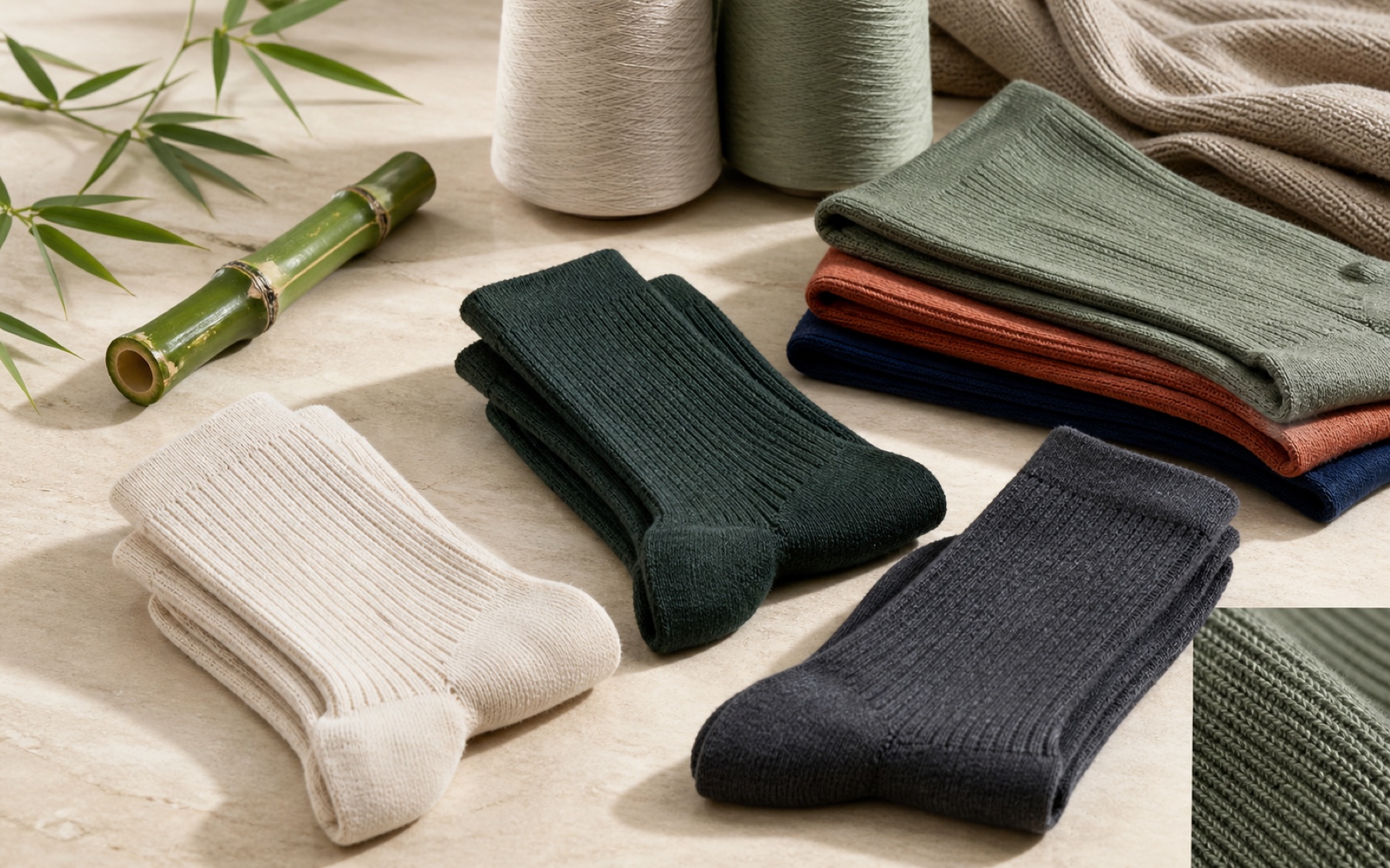
A private-label range is easier to source when every style has a clear role. Start with a small architecture such as an everyday core, a seasonal color story and one technical or premium option. This keeps the first launch focused while leaving room to expand after sales data is available.
Create a simple line plan listing style code, silhouette, target wearer, color count, size range, intended price tier and packaging. A line plan also helps prevent accidental duplication when several buyers or designers are involved.
Choose the right level of customization
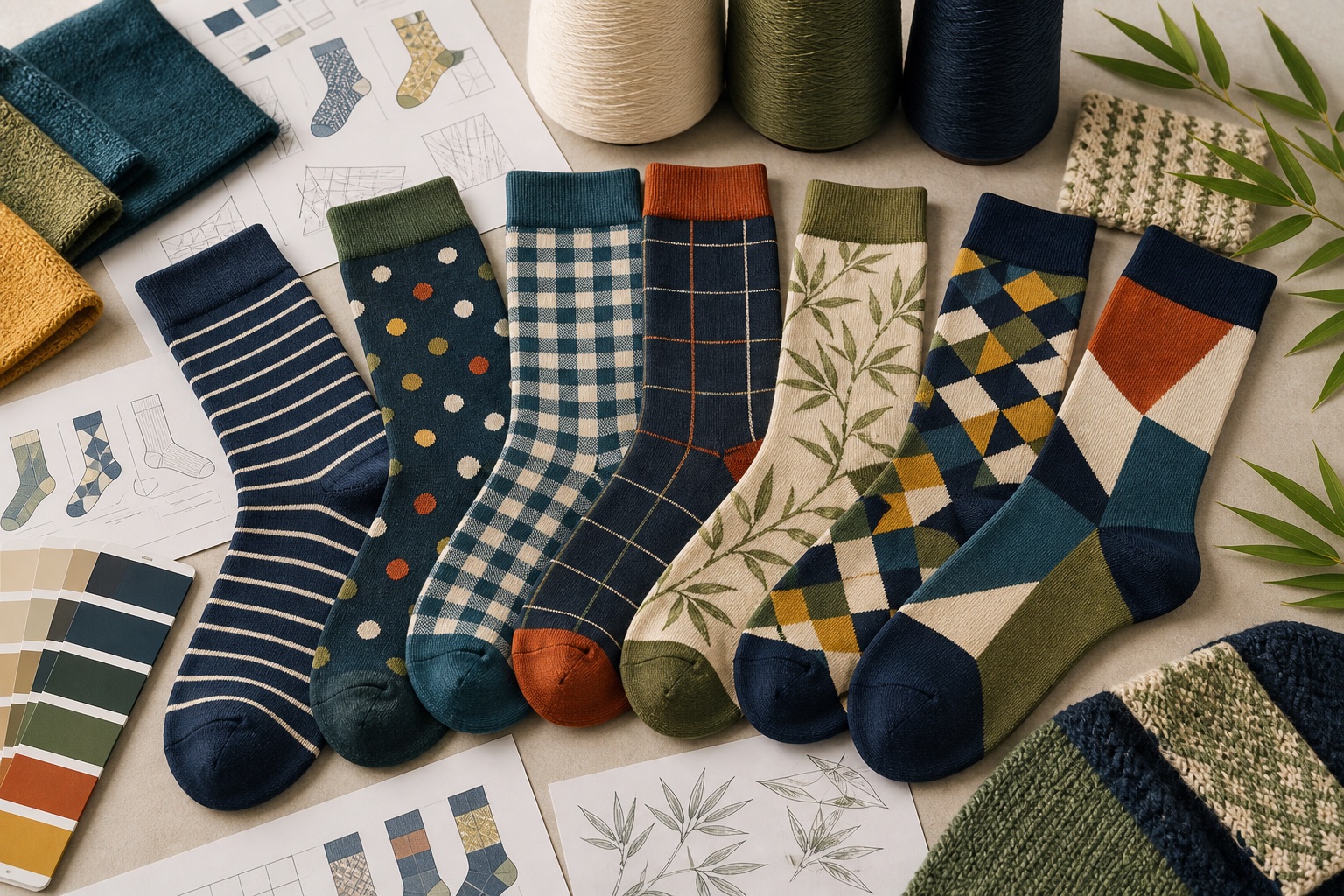
Customization can range from an existing construction in custom colors to a fully developed product with unique artwork and packaging. More changes usually mean more sampling work, so buyers should concentrate investment on details customers will notice.
- Custom yarn colors or approved stock colors
- Jacquard logos and patterns
- Embroidery or applied branding where suitable
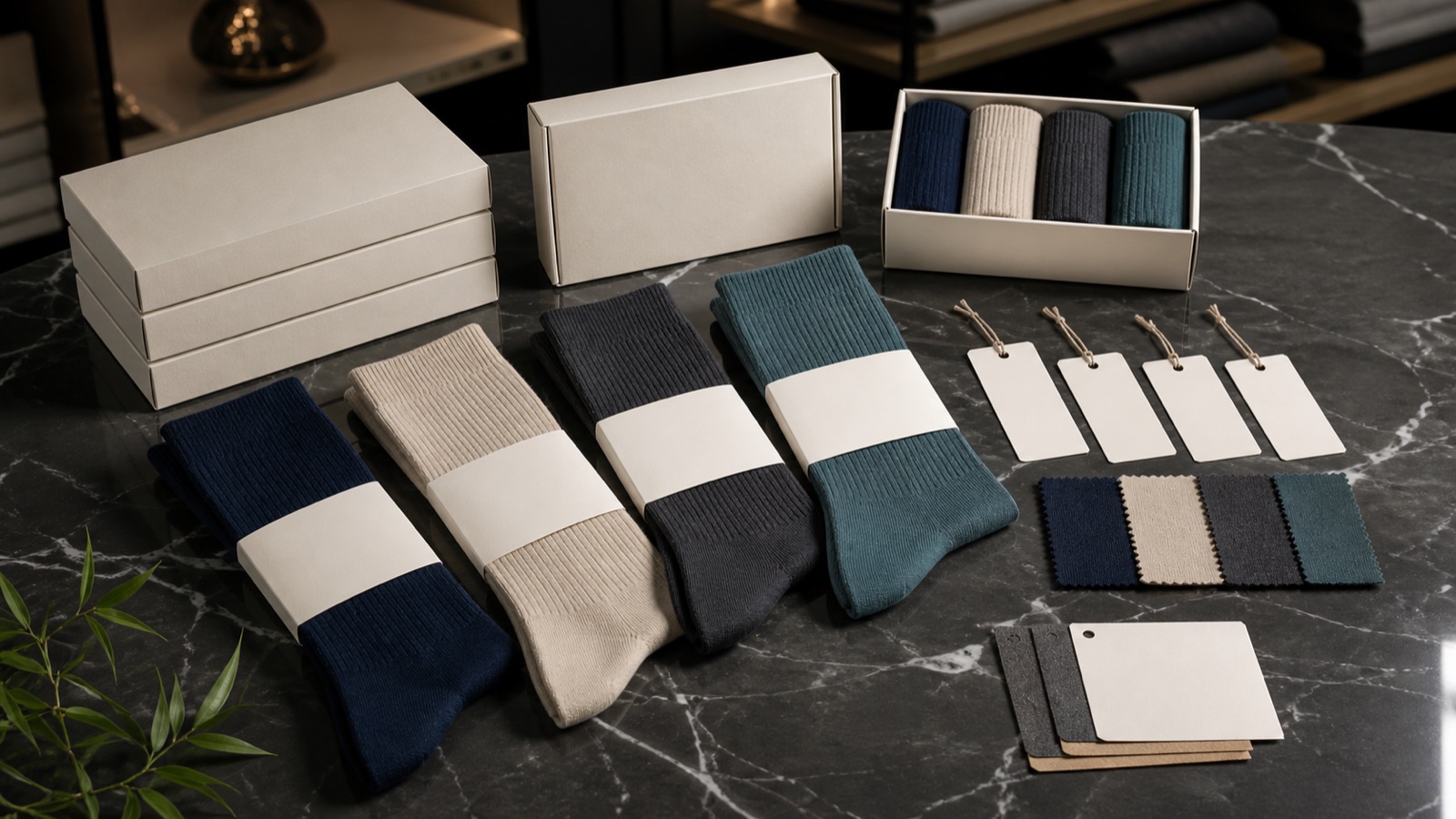
- Private labels, belly bands and hangtags
- Retail boxes, multipacks and carton marks
Protect brand consistency
Provide vector logos, color references, typography rules and packaging artwork in organized files. Define minimum clear space and acceptable logo placement instead of leaving interpretation to the sample room. For patterned socks, confirm how artwork repeats around the leg and how it changes across sizes.
Packaging should state legally required fiber, origin, care and importer information for the destination market. The brand owner remains responsible for reviewing local compliance, while the supplier can support accurate product data and production artwork.
Plan for repeat orders
A successful private-label program needs a repeatable specification. Keep approved samples, measurement charts, color references, packaging files and order breakdowns under controlled version names. If a component changes, record the reason and approval date.
During the first quotation, share both launch quantity and realistic repeat potential. This helps the manufacturer discuss color allocation, packaging quantities and reorder planning with better context.
Plan the first ninety days after launch
Before production, decide which sales and quality information will be reviewed after launch. Track sell-through by style, color and size, then compare returns or feedback with the approved specification.
Use early results to adjust reorder depth rather than redesigning the whole collection immediately. Stable core products create a useful baseline for testing new patterns, packaging and premium options.
- Track sales by SKU and size
- Record fit and quality feedback
- Protect continuity of core products
- Use evidence to plan the first reorder
Private-label bamboo sock launch checklist
A commercially focused first collection usually combines a dependable core product with a limited number of distinctive colors, patterns or premium details. This makes inventory, packaging and repeat-order planning easier to control.
Keep product and brand decisions synchronized. The sock fold, label position, barcode area and outer pack should be reviewed together so the finished presentation works online, on shelf and in fulfillment.
- Create a style and color line plan
- Supply vector logos and artwork rules
- Define size labels and market information
- Approve a complete packed sample
- Archive final files for repeat orders
Frequently asked questions
Can a factory add my logo to an existing bamboo sock?
Often yes. Depending on the base style and logo, options may include knitted jacquard, embroidery, print, woven labels or branded packaging. The best method depends on detail, placement, stretch and order quantity.
What is included in private-label packaging?
Programs may use belly bands, hangtags, boxes, pouches, multipack sleeves, barcodes and carton marks. Each component should have an approved artwork file, material, dimension and packing instruction.
How can a brand make reorders more consistent?
Maintain version-controlled specifications, approved samples, color references, packaging dielines and size allocations. Reference the same style codes on purchase orders and record every approved change before production.
Plan your custom bamboo sock project.
Build the collection around repeatable specifications, recognizable brand details and a practical opening assortment. Our team can coordinate sock development, logo application and private-label packaging in one project.
Specifications, claims, testing, labeling and compliance should be confirmed for the exact product and destination market. This guide is general sourcing information, not legal or medical advice.