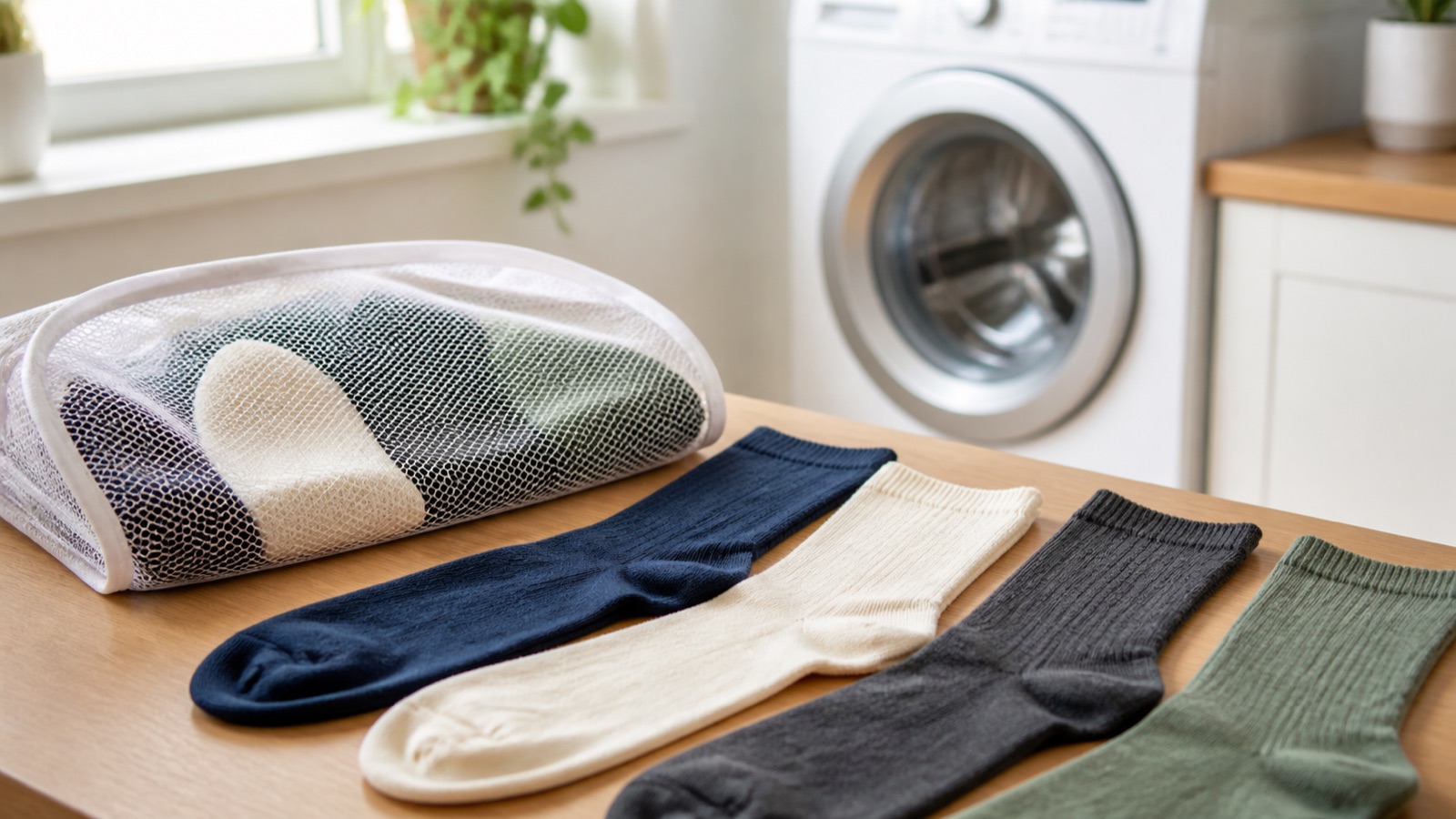
Follow the approved care label
Care instructions should be based on the final product, not copied from a generic article. Blend, dye, elastane, print, embroidery and packaging claims can all affect the appropriate method. The supplier and brand should confirm instructions before labels are printed.
For many everyday bamboo-blend socks, gentle washing and moderate temperatures may help preserve appearance and stretch, but the approved label remains authoritative.
Practical consumer guidance
Simple instructions are more likely to be followed. Avoid overloading the label with unnecessary language, while providing extra detail on the product page when helpful.
- Wash with similar colors
- Use the temperature shown on the care label
- Avoid harsh bleaching unless specifically permitted
- Dry according to the approved instruction
- Keep pairs together to simplify use
Protect stretch and surface appearance
High heat and aggressive treatment can affect elastane and surface appearance in many sock types. Turning patterned or dark socks inside out may reduce direct abrasion during washing, although brands should validate any recommendation on the actual product.
Pilling and dimensional change depend on both use and laundering. A wear-and-wash evaluation can help establish realistic guidance.
Align product, packaging and ecommerce copy
The same care message should appear on the sewn label, retail packaging and online listing. If the specification changes, update all three sources.
Accurate care information supports customer satisfaction and protects the intended fit and appearance of the product.
Use consumer feedback to refine care guidance
Monitor common complaints such as shrinkage, pilling or cuff damage and compare them with the published care method. Some issues may point to unrealistic instructions, while others may require a construction change.
Care labels should remain easy to follow. Adding many warnings can confuse customers, so prioritize the conditions demonstrated by testing and relevant to normal use.
- Track post-wash feedback
- Compare complaints with test results
- Keep instructions concise
- Update labels only after review
Care instruction development checklist
Care guidance should reflect the complete blend, dye and construction. Simple, achievable instructions can improve customer satisfaction and help preserve size, surface appearance and elasticity.
Validate symbols and text after wash testing the intended production sample. Packaging and online instructions should communicate the same approved method.
- Test the finished colored product
- Measure shrinkage and recovery
- Inspect pilling and dye transfer
- Use market-appropriate care symbols
- Keep packaging and online guidance consistent
Frequently asked questions
Can bamboo-blend socks be machine washed?
Many are designed for machine washing, but the approved temperature and cycle depend on the complete product. Follow the care instruction supplied for that exact sock.
Should bamboo socks be tumble dried?
Heat can affect shrinkage, surface appearance and elastic components. Brands should base drying guidance on testing rather than giving one universal instruction.
Why do socks pill after washing?
Fiber, yarn twist, friction, construction, color and wash conditions can all contribute. Comparative wash testing helps the product team set realistic expectations and improve the specification.
Plan your custom bamboo sock project.
Clear, tested care instructions support product life and reduce avoidable complaints. Include care validation in the sample approval process instead of adding generic text at the end.
Specifications, claims, testing, labeling and compliance should be confirmed for the exact product and destination market. This guide is general sourcing information, not legal or medical advice.