Choose the right checked pattern family
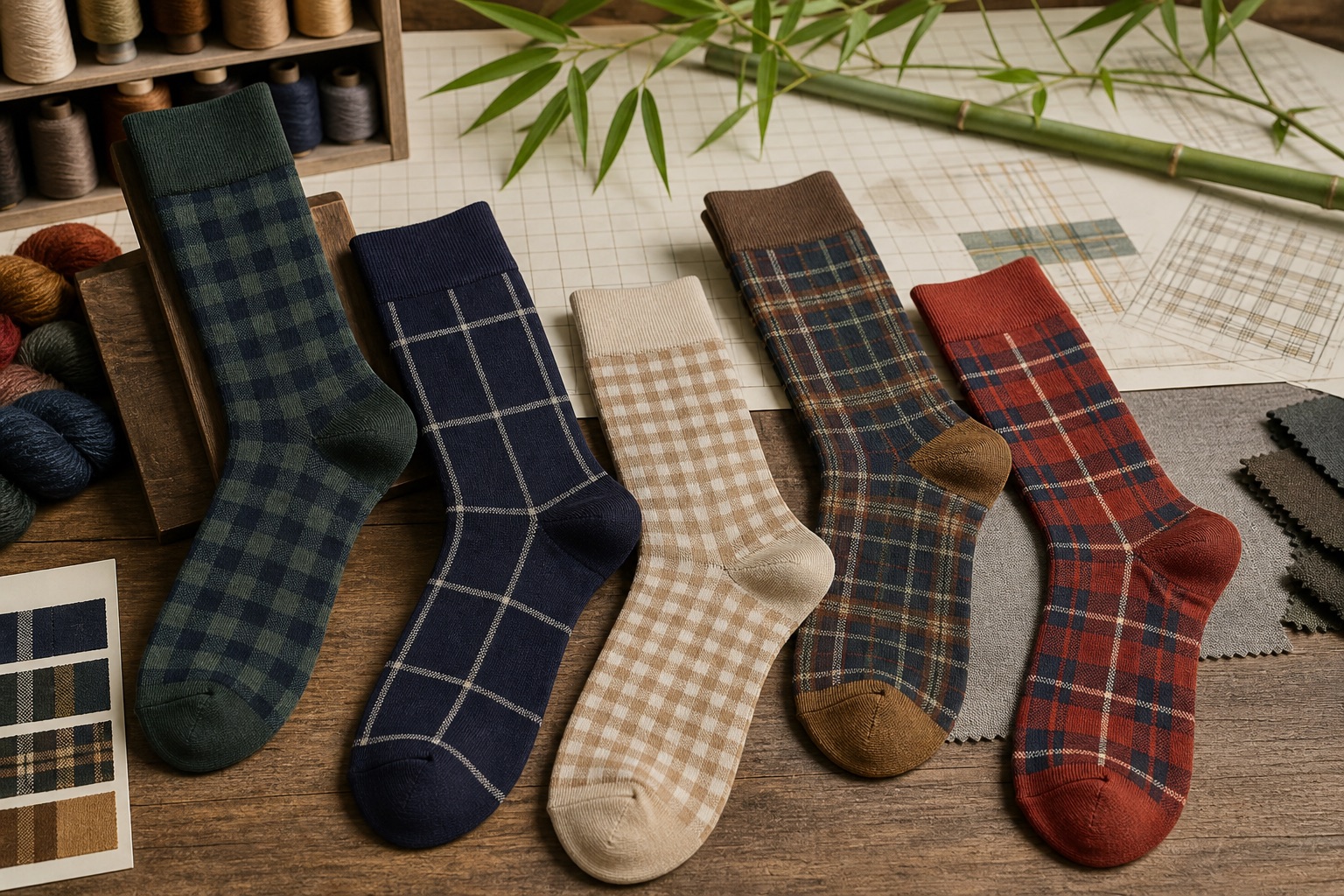
Checked socks can range from simple two-color gingham to open windowpane grids and layered plaid-inspired repeats. Each direction creates a different knitting challenge and market impression. Gingham can feel relaxed and approachable, windowpane patterns suit modern dress collections, and multi-color plaids support heritage or seasonal stories.
Buyers should select the pattern family before expanding the palette. Trying to combine every type of check into one first range can create inconsistent product weight, stretch and visual density.
Simplify complex artwork for sock knitting
Plaid artwork often contains overlapping lines and subtle color mixing that cannot be translated directly into a limited-yarn jacquard construction. The design team may need to reduce line counts, combine nearby shades or create the visual impression of an overlap using solid stitches.
The repeat should be tested around the calf and across the ankle bend, where geometric lines can distort. A clean, simplified plaid is usually more successful than a screen-accurate design that becomes heavy or rigid.
- Two-color gingham for a cleaner construction
- Windowpane checks with controlled line weight
- Three- or four-color plaid-inspired repeats
- Contrast heel and toe using a shared collection color
- Size-adjusted repeats where stitch counts differ
Use color to define adult market positioning
Forest green, navy, camel, cream and rust can support a sophisticated unisex assortment. High-contrast black-and-white checks may suit streetwear, while tonal combinations can move toward business or gifting channels. Review the complete range together to prevent colorways from competing with one another.
Custom-dyed yarn may improve a brand match but can affect MOQ and lead time. If opening quantities are limited, available yarn colors can be organized into a coherent story with careful base and accent selection.
Control alignment, fit and repeat orders
Checks reveal variation more readily than random patterns because buyers notice lines and intersections. Define realistic visual tolerances, inspect pair matching and confirm how the pattern ends at the cuff, heel and toe.
Store the final repeat chart, yarn references, measurements and approved physical sample. For repeat orders, small changes in yarn or machine settings should be reviewed because they can alter the apparent line weight and spacing.
Build a commercially balanced check assortment
Combine one simple gingham, one open windowpane and one richer plaid-inspired design instead of repeating similar grids. Each should have a clear customer and wearing occasion.
Limit the first palette to shared neutrals and a few seasonal accents. This makes the range easier to present and may reduce the number of unique yarn colors required.
- Give each check style a distinct role
- Share neutral base yarns
- Control visual density
- Test pair alignment during inspection
Checked and plaid sock buyer checklist
Checked patterns need disciplined line weight, repeat scale and color count. Simplifying complex plaid artwork often improves stretch, clarity and production consistency.
Because grids reveal small variation, inspection standards should address pair matching, line continuity and where the repeat meets each construction zone.
- Choose gingham, windowpane or plaid direction
- Reduce artwork to knit-ready solid colors
- Test line distortion around ankle and calf
- Define pair-matching expectations
- Keep repeat charts and yarn references for reorders
Frequently asked questions
Can a tartan image be copied directly onto a sock?
Complex artwork usually needs adaptation for stitch resolution, yarn limits and stretch. Buyers should also confirm they have the right to use any protected or brand-specific pattern.
Which check pattern is easiest to manufacture?
A two-color gingham or simple windowpane typically uses fewer yarn changes than a layered plaid. Final complexity still depends on gauge, scale and construction.
Do checked patterns work across several sock sizes?
Yes, but repeat proportions and placement should be checked on key sizes. A pattern that aligns well on one stitch count may require adjustment on another.
Plan your custom bamboo sock project.
Checked bamboo socks can support refined dress, heritage gifting and contemporary fashion programs. Start with the target pattern family and color story before finalizing the size and packaging plan.
Specifications, claims, testing, labeling and compliance should be confirmed for the exact product and destination market. This guide is general sourcing information, not legal or medical advice.