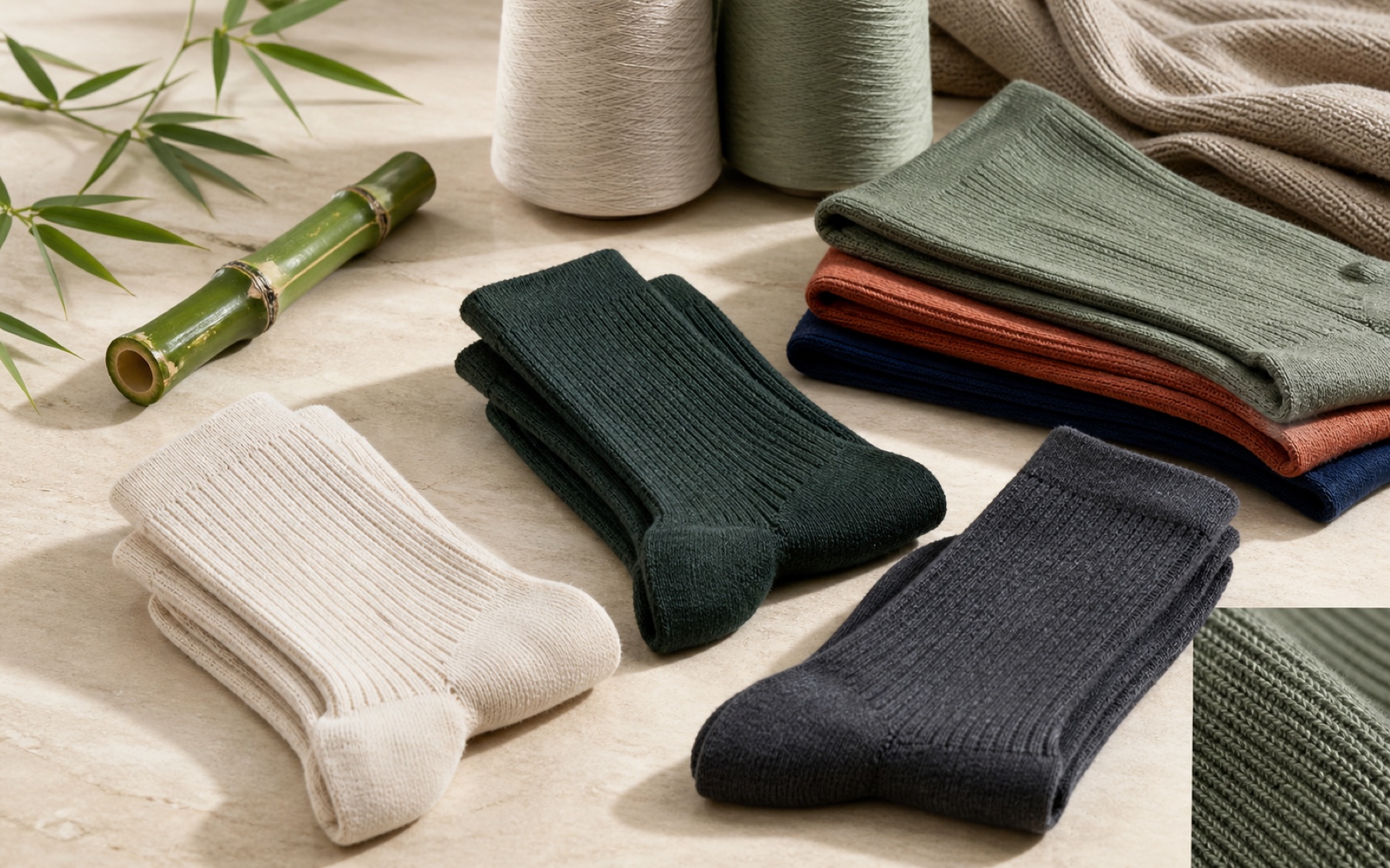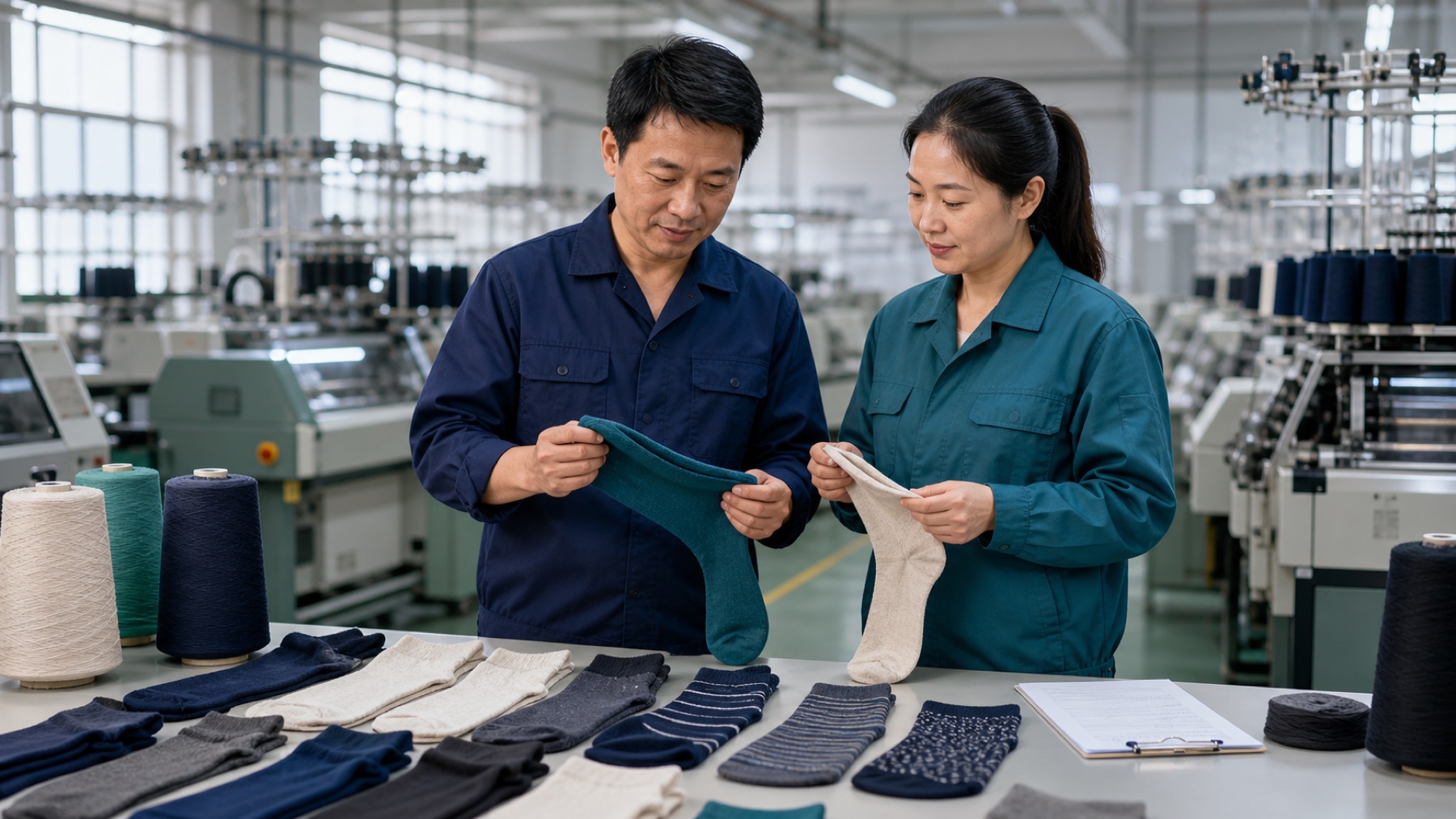
Start with the product brief, not the fiber name
A useful bamboo sock brief begins with the wearer, use case, price position and sales channel. A lightweight dress sock, cushioned casual sock and compression-style travel sock may all use bamboo-derived viscose, yet they require different constructions. Buyers should define silhouette, thickness, season, target market, size range and packaging before asking a factory to recommend a blend.
The term “bamboo socks” alone does not define performance. The manufacturer still needs to balance softness, moisture handling, shape retention, abrasion resistance and knitting stability. Clear commercial priorities help the development team choose a realistic yarn blend and construction instead of optimizing one feature at the expense of the whole product.
Key development choices
Most programs move through material selection, knitting construction, size specification, color or artwork development, labeling and packaging. Each choice affects sampling time and unit cost, so it is helpful to separate must-have requirements from optional preferences.
- Fiber blend and yarn count
- Crew, ankle, no-show, knee-high or compression silhouette
- Cushioning, mesh, rib and reinforcement zones
- Solid color, jacquard pattern, embroidery or other branding
- Pairing, labels, belly bands and retail packaging
Use samples to remove ambiguity
A sample is the point where a written brief becomes a physical product. Review hand feel, stretch recovery, fit, cuff pressure, toe seam, artwork clarity and packaging together. If the sample is intended as the production standard, record approved measurements, materials, colors and construction details rather than relying only on photographs.
Changes requested after approval can affect price and lead time. Consolidating feedback into one clear sample review is more efficient than sending separate comments from design, sales and purchasing teams.
What to confirm before bulk production
Before production, confirm the final specification, quantity by size and color, packaging, carton requirements, quality standard, delivery terms and approved reference sample. A responsible supplier should also distinguish verified product facts from marketing language that still requires testing.
For a faster quotation, send your target quantity, market, preferred style, artwork status and desired delivery window in the first inquiry. That gives the manufacturer enough context to propose the next useful step.
How to compare manufacturing proposals
Ask each supplier to restate the product assumptions behind the price, including yarn blend, gauge, weight, reinforcement, packaging and trade terms. This turns the quotation into a document that can be audited instead of a single number.
Build a comparison sheet that separates confirmed requirements from recommendations. When one proposal differs, decide whether the change improves the product or simply reduces cost before selecting a manufacturing partner.
- Normalize materials and construction
- Separate sample and bulk charges
- Compare packaging and quality scope
- Record trade terms and delivery assumptions
Bamboo sock manufacturing checklist for buyers
Treat the specification as the commercial center of the project. A useful tech pack connects material composition, construction, measurements, artwork, packaging and inspection criteria so the approved sample can be reproduced during bulk manufacturing.
Before comparing quotations, check that every supplier is pricing the same blend, sock weight, size mix, packaging and trade terms. A lower price based on a different specification is not a like-for-like manufacturing comparison.
- Define the wearer, use case and target price tier
- Record blend, construction and size measurements
- Approve physical colors, artwork and packaging
- Confirm quantity allocation and production tolerances
- Keep one sealed approval sample for final inspection
Frequently asked questions
What information does a bamboo sock manufacturer need first?
Share the sock height, intended wearer, size range, target quantity, colors or artwork, packaging needs, destination market and required timing. A reference sock or annotated sketch is helpful when construction details are difficult to describe.
How many samples are normally required?
The number depends on complexity. A simple solid-color style may need fewer rounds than a new compression construction or multi-color pattern. Buyers should plan separate approval points for fit, appearance and retail packaging when those elements develop at different speeds.
Can one specification cover every bamboo sock style?
No. Everyday crews, dress socks, fashion patterns and compression directions require different yarn, density, reinforcement, sizing and validation. A shared brand standard can guide the range, but every style still needs its own controlled product specification.
Plan your custom bamboo sock project.
A reliable custom bamboo sock program begins with a precise brief and ends with a controlled approval sample. Send us your target style, quantity and branding requirements to map the right sampling and production route.
Specifications, claims, testing, labeling and compliance should be confirmed for the exact product and destination market. This guide is general sourcing information, not legal or medical advice.